 English
 Deutsch
 Pусский
 Español
 Français
 Português
That 437th crimp your electrician just finished, are you sure the 438th will be exactly the same?


You have seen the pattern. A utility‑scale solar farm going up, dozens of electricians spread across rows of racking, each one crimping MC4 connectors onto cut‑to‑length cable sections. Each termination looks identical to the naked eye, but the electrician who cut the insulation two millimeters too long on one cable created a joint with higher contact resistance—and you will not see that hot spot until an infrared camera scans the array a year after commissioning.
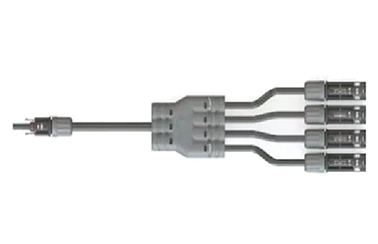
A solar harness that arrives at the site already terminated and tested removes the variable that causes the most failures in PV systems: human error in field‑crimped connections. The SH‑4B1 Branch is a pre‑assembled solar harness designed for 1500V DC systems. It comes with factory‑crimped contacts, insulation tested for 25‑year outdoor life, and built‑in cross‑compatibility with industry‑standard connectors. This article walks through why pre‑terminated harnesses reduce thermal failures, how the SH‑4B1 Branch performs in high‑voltage strings, and what field inspectors should check when switching from field‑crimp to factory‑assembled cabling.
The thermal hot spot that thermal cameras find a year later started with one bad crimp
A field‑crimped MC4 connection looks fine when it leaves the electrician’s hands. The contact resistance at that moment might be 0.2mΩ—well within spec. But over time, thermal cycling expands and contracts the metal. A crimp that was slightly under‑compressed will gradually loosen. Corrosion creeps into the interface. By the end of the first summer, that same connection could be dissipating 5‑10W of heat, visible only by infrared.
Field data across large‑scale PV systems indicates that improper termination is one of the most frequently identified root causes of connector failures. The SH‑4B1 Branch solar harness eliminates the variability of human‑performed terminations by moving the crimping operation to the factory, where pneumatic crimping presses maintain consistent compression force on every contact, every cycle.
How factory‑crimped contacts maintain lower resistance over 25 years
Factory crimping uses calibrated dies and closed‑loop force monitoring. Each contact is crimped to a specified compression range, not just “tight enough.” The resulting contact resistance is consistently below 0.2mΩ and remains stable under thermal cycling. In contrast, even well‑trained electricians produce crimps with measurable variation—some too loose (high resistance, risk of arcing), some too tight (strands broken, reduced current carrying capacity).
One harness, multiple string configurations – the SH‑4B1 Branch as a modular building block
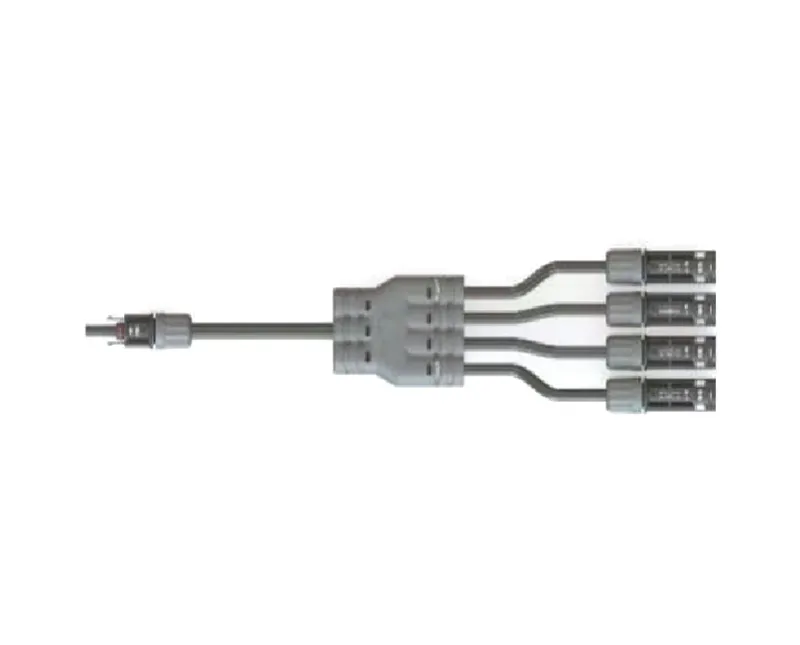
The SH‑4B1 Branch is a branching solar harness. It combines multiple input strings into a single output feed, reducing the number of field‑installed T‑connectors and splice boxes. For a typical 1500V DC array, a single SH‑4B1 can replace several discrete connectors and the labor to assemble them.
| Harness Feature | Benefit |
|---|---|
| Pre‑terminated with industry‑compatible connectors | No on‑site crimping; works with existing MC4‑style systems |
| 1500V DC rating | Compatible with modern utility‑scale string voltages |
| Factory insulation and continuity tested | No open circuits or shorts discovered after installation |
| UV‑resistant cable jacket | 25‑year outdoor exposure without cracking |
The harness arrives coiled on a pallet, labeled by length and configuration. Electricians unroll it, route it along racking, and plug it in – no cutting, no stripping, no crimping. The labor saving on a 50MW site can run to hundreds of person‑hours, and the quality consistency is effectively perfect.
Cross‑compatibility without cross‑mating: what the SH‑4B1 Branch actually connects to
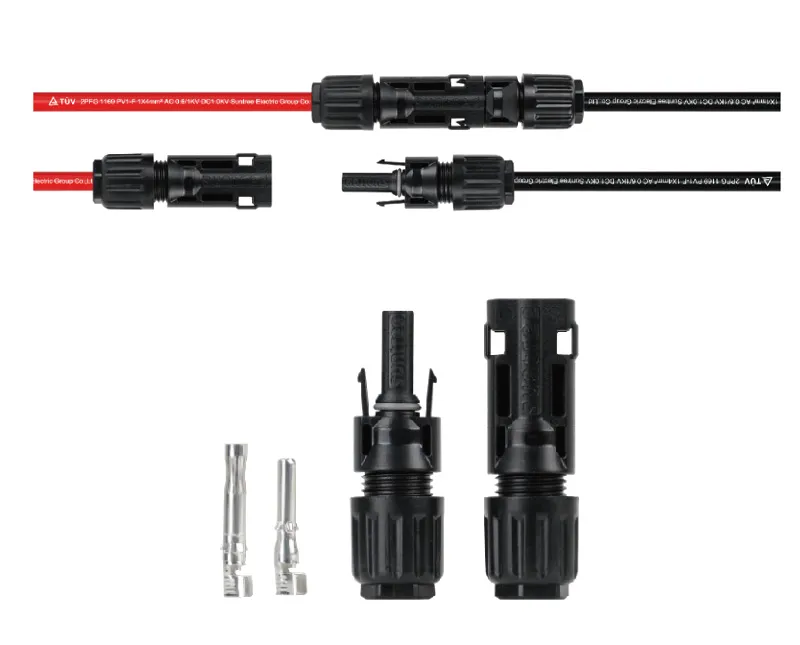
One common field error is cross‑mating connectors from different manufacturers. A male plug from Brand A might physically fit a female from Brand B. The click feels fine. But the contact geometry, spring force, and sealing lip dimensions are not standardized across brands. Cross‑mating invalidates the safety certification (IEC 62852, UL 6703) and can lead to increased contact resistance and eventual failure.
The SH‑4B1 Branch is designed to be compatible with industry‑standard connectors, but it comes as a complete pre‑assembled harness using factory‑matched male and female connectors. This means the entire branch circuit uses connectors from the same family, eliminating the risk of mixed‑brand interfaces within the harness. The electrician only needs to connect the harness ends to the array’s main trunk connectors—which are themselves from the same product family or cross‑compatible with respect to the mating interface specification.
What the UL 4703 certification actually covers
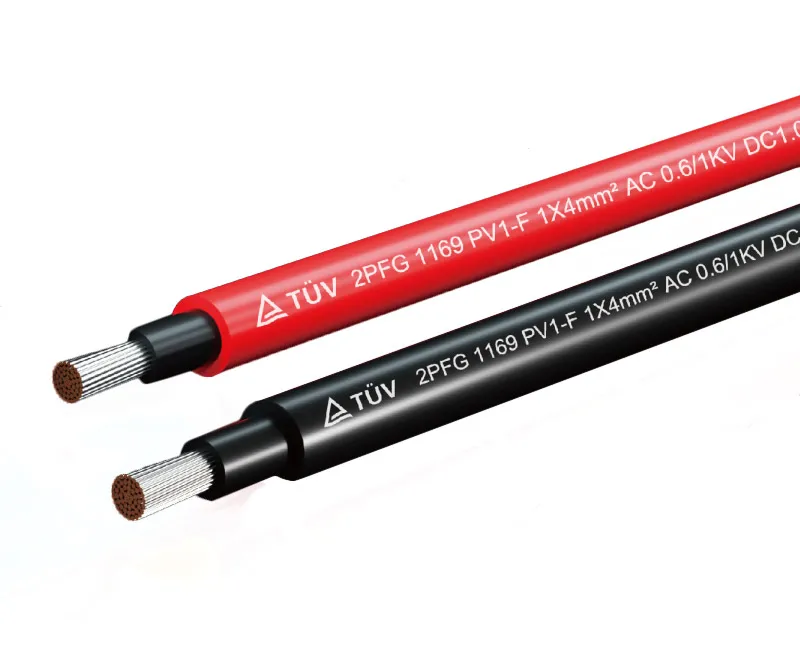
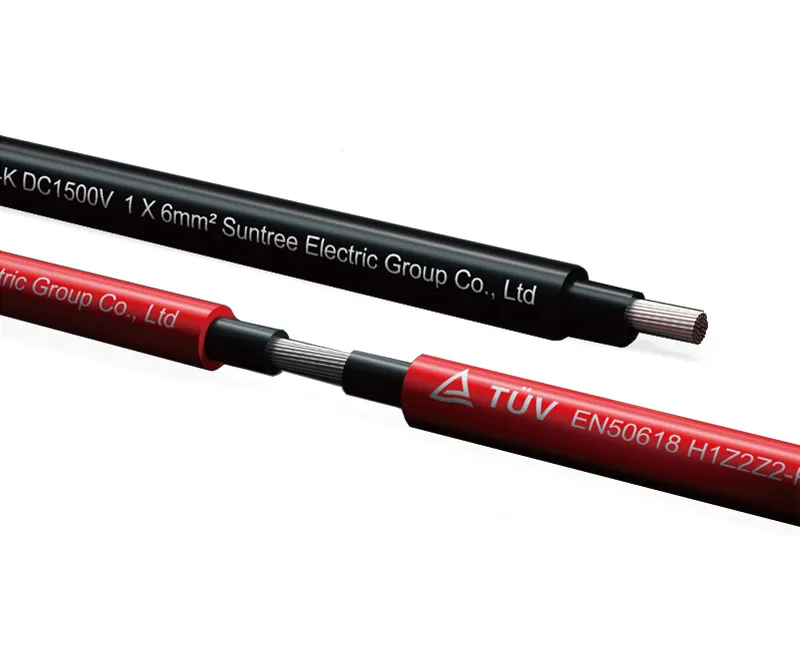
UL 4703 is the standard for photovoltaic wire. It covers conductor stranding, insulation thickness, temperature rating (‑40°C to +90°C), sunlight resistance, and flame exposure. The SH‑4B1 Branch uses UL 4703 listed wire, ensuring the cable itself meets the long‑term reliability requirements of a 25‑year solar installation. The connectors are rated to the same temperature range and carry IP68 protection when mated.
The cost of a field‑crimped failure is not just the replacement connector
When a field‑crimped connection fails—usually identified by thermal imaging during routine O&M inspections—the repair process is expensive. A technician must locate the exact connector, de‑energize the string, cut out the failed termination, strip the cable insulation, crimp a new connector, and re‑mate it. Depending on access, this can take 30‑60 minutes per failure. On a 100MW site with a 1% failure rate over ten years, that is hundreds of repair events.
A pre‑assembled solar harness like the SH‑4B1 Branch has a near‑zero factory termination failure rate. The only field connections are at the harness ends—and those are plug‑and‑play, using the same connectors throughout the array. Over the life of the plant, the reduction in O&M calls for connector failures alone often pays for the incremental cost of pre‑assembled harnesses multiple times over.
Three things a site inspector should verify when switching to pre‑assembled harnesses
Transitioning from field‑crimped cables to a pre‑assembled solar harness changes the inspection checklist. Instead of verifying each crimp’s pull‑test, the inspector focuses on proper routing and connector mating.
Start with the harness routing. Pre‑assembled harnesses have fixed lengths and branch points. Check that the harness layout matches the site plan. Too much slack forces tight bends that can stress the cable jacket. Too little slack puts tension on connectors. The SH‑4B1 Branch uses flexible, UL 4703‑rated cable that can handle small field adjustments, but large discrepancies should be flagged to engineering before installation proceeds.
Then check every connector mating. Instruct electricians to listen and feel for the audible click when mating each harness end to the trunk connector. A partially mated connector may still pass a continuity check but will heat up under load. After installation, a randomized sample of mated pairs should be checked using a torque‑type pull gauge to ensure proper engagement.
Finally, verify the strain relief. The harness cable should enter the connector housing without sharp bends at the strain relief boot. If the cable is bent immediately outside the connector housing, the internal conductor strands may fatigue over time from wind‑induced vibration.
How the SH‑4B1 Branch fits into a 1500V DC balance‑of‑system portfolio
Suntree manufactures solar harnessing solutions as part of a complete 1500V DC balance‑of‑system offering. The SH‑4B1 Branch sits alongside the PMCN series connectors, the A4 nB1 branch connectors, and UL listed PV wire. For a utility‑scale project using 1500V DC architecture, Suntree can supply the entire cabling and connector package—harnesses, trunk cables, branch connectors, and inline fuses—with pre‑assembled terminations ready for plug‑and‑play field assembly.
The SH‑4B1 Branch is built from halogen‑free materials, with copper alloy contacts plated for low resistance, and is rated for outdoor exposure including UV, salt spray, and temperature extremes. The product line is certified to ISO 9001, 14001, and 45001, with material traceability documented per batch.
For a solar harness that removes the most common single point of failure in PV systems—the field‑crimped connection—the SH‑4B1 Branch provides a factory‑assembled, plug‑and‑play solution. Electricians work faster, system reliability improves, and O&M costs drop over the life of the plant.
-0943.webp)