 English
 Deutsch
 Pусский
 Español
 Français
 Português
That thermal hot spot on your infrared scan is what happens when you skip a solar harness


The annual IR scan is the moment of truth. The SCADA numbers look fine, string after string. But when the technician unloads the thermal images, a pattern emerges. Small orange dots at connector locations. Each one is a field‑crimped termination that has begun to overheat. The electrician who made it probably did everything by the book—cut the insulation to the right length, inserted the contact fully, squeezed the crimper until it bottomed out. Yet six months later, the joint has loosened just enough. The contact resistance has climbed by 5 to 10 milliohms, not enough to trip a protection device, but enough to start softening the plastic housing.
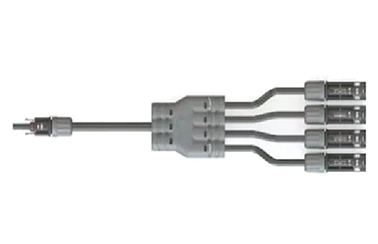
A solar harness made in a factory rather than in the field takes that variable off the table. The SH‑3B1 Branch is a pre‑terminated, 1500V DC rated harness that handles up to 32A per input and arrives on site ready to unroll and plug in. No stripping, no crimping, no guesswork. This article explains why field terminations drift, how the SH‑3B1 Branch maintains low contact resistance, and what to check on site when you switch from field‑crimped cables to pre‑assembled harnesses.
A field crimp that looks perfect can still hide a failure for months
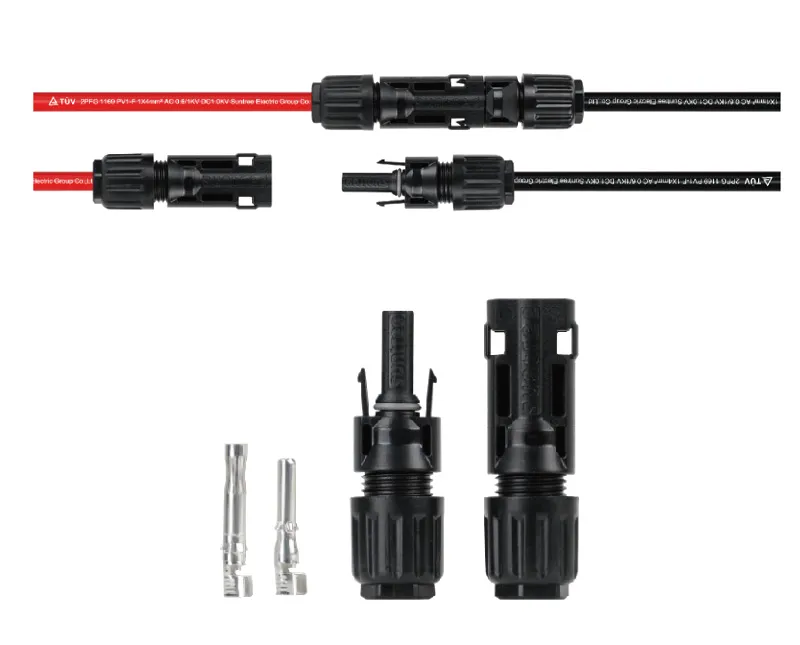
A field-crimped MC4 connection passes the initial pull test. The continuity check shows low resistance. The connector clicks into place. Everything looks right, but a crimp that was slightly under-compressed will gradually loosen over the first year of operation. Thermal cycling expands and contracts the metal. Oxidation creeps into the interface. By the end of the first summer, the same connection that passed inspection may be dissipating enough heat to soften the plastic housing.
Data from PV reliability studies shows that connection‑quality issues—improper crimping, incorrect assembly, and mismatched components—account for a large share of revenue losses in operating PV plants. Factory manufacturing removes the human variable altogether, because each termination is made with calibrated dies and closed‑loop force monitoring, producing consistent compression across every contact.
The SH‑3B1 Branch as a modular building block for large-scale arrays
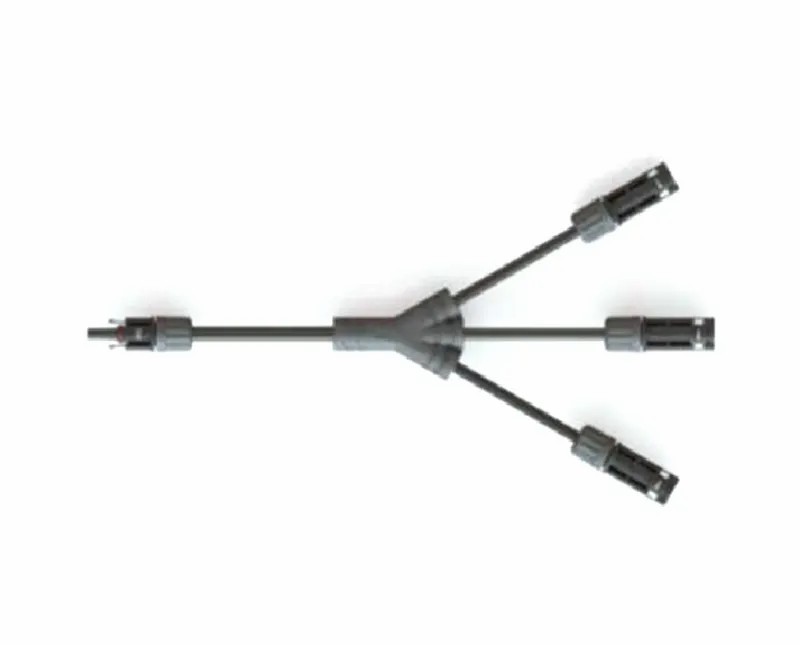
The SH‑3B1 Branch is a branching solar harness designed to combine multiple input strings into a single output feed, simplifying field wiring. For a typical 1500V DC array, the harness reduces the number of discrete T‑connectors and splice boxes that must be field‑assembled, which in turn reduces the number of potential failure points.
The SH‑3B1 Branch is factory‑terminated and arrives loosely coiled on a shipping pallet, labeled by length and configuration. Electricians unroll it, route it along the racking, and plug each branch into the string inputs. No stripping, no crimping, and no guesswork.
| Harness Feature | SH‑3B1 Specification |
|---|---|
| Rated voltage | DC 1500V (IEC & UL certified) |
| Rated current per input | Max 32A |
| Input configuration | 3‑to‑1 branch (three input strings to one output) |
| Cable spec range | 4mm² – 16mm² |
| Waterproof rating | IP68 |
| UV resistance | Yes – sunlight‑ and ozone‑resistant materials |
Lower contact resistance and higher current transfer – what the numbers guarantee
Contact resistance at a termination point determines how much of the generated power reaches the inverter instead of being lost as heat. The SH‑3B1 Branch is specified to have lower contact resistance and higher current transfer capability, which translates directly into higher system efficiency, particularly under high‑irradiance conditions when string currents approach the 32A rating.
Lower contact resistance is also a risk‑reduction feature. A connection with elevated resistance will heat up under load. As the temperature rises, the contact surfaces oxidize faster, resistance increases further, and the cycle continues until the connector fails. Starting with a factory‑optimized termination means the initial resistance is as low as the design allows, providing more thermal headroom before the connection enters the runaway heating cycle.
Cross‑compatibility and IP68 environmental protection
The SH‑3B1 Branch uses high-quality fuses and insulating materials that support long‑term reliability. The IP68 waterproof rating means the mated connection is protected against dust ingress and continuous immersion beyond one meter, which is essential for ground‑mounted arrays in flood‑prone regions or rooftop systems where standing water accumulates on flat roofs after heavy rain.
UV‑resistant materials protect the cable jacket from solar degradation over the full 25‑year design life of the array. Without UV‑stabilized insulation, the jacket becomes brittle after several years of exposure, cracks, and allows moisture ingress that corrodes the conductors and degrades electrical performance. The SH‑3B1 Branch is built from UV‑resistant compounds that maintain flexibility and mechanical strength even after decades of exposure.
Three field checks when switching to pre-assembled harnesses
Transitioning from field‑crimped cables to a pre‑assembled solar harness changes the field inspection routine. Instead of verifying each crimp with a pull test, the inspector focuses on proper mechanical mating and strain relief.
Start with the connector seating. Instruct electricians to listen and feel for the audible click when mating each harness end to the string connector. A partially mated connection will pass a continuity check but will heat up under load, and the heat will not become visible until an infrared camera scans months later.
Then verify the cable routing. Pre‑assembled harnesses have fixed branch points and lengths. Compare the field routing against the site layout plan. Sharp bends at the connector entry point will stress the cable jacket and may pull the internal conductors loose over time.
Finally, check the strain relief boot. The boot should fully cover the cable‑to‑connector transition without gaps. If the boot is displaced during installation, debris may enter the cavity and compromise the IP68 rating.
How the SH‑3B1 Branch fits into a 1500V DC BOS portfolio
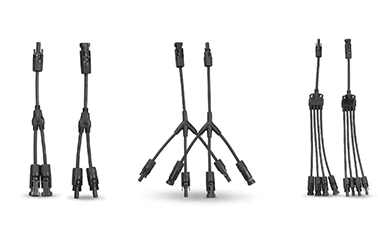
Suntree manufactures solar harnessing solutions as part of a complete 1500V DC balance‑of‑system offering. The SH‑3B1 Branch sits alongside the SH‑4B1, SH‑5B1, and SH‑6B1 branch harnesses, which support different input counts for scalable system design. All share common specifications: 1500V DC rating, IP68 waterproofing, UV‑resistant materials, and cable acceptance from 4mm² to 16mm².
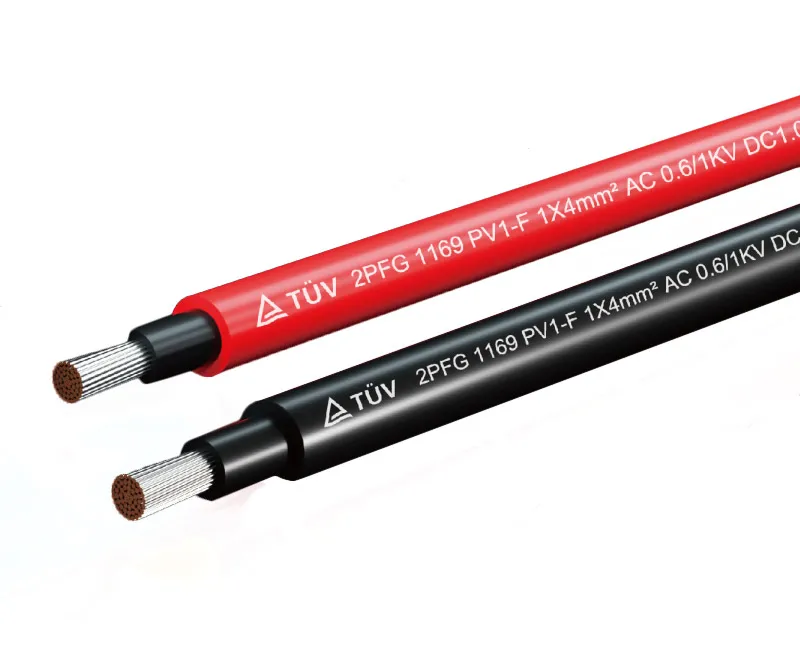
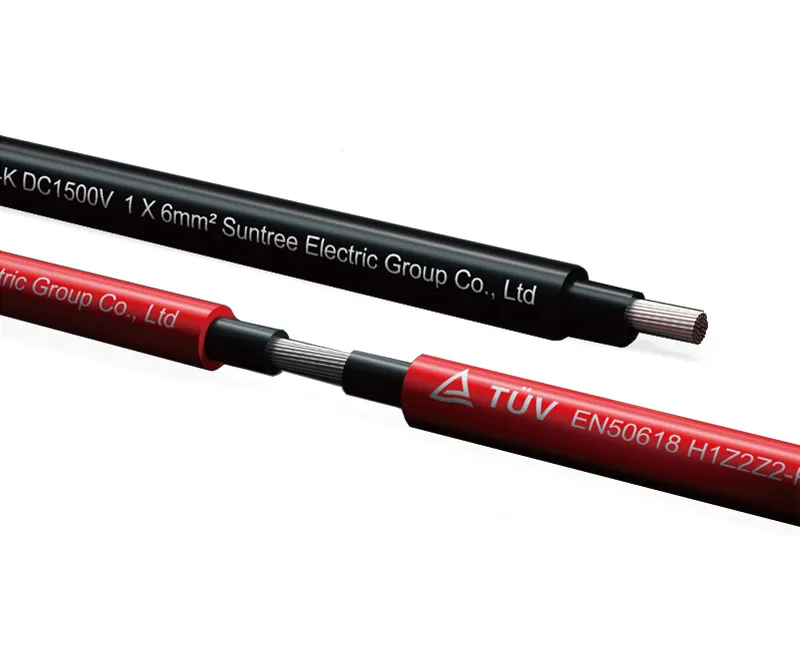
Suntree qualifies its harnesses in TÜV and ETL labs to verify compliance with both IEC and UL standards, covering safety, long‑term reliability, and environmental performance. The company maintains full‑process quality control, uses halogen‑free materials, and limits heavy metal content such as lead and cadmium in its products.
For a solar harness that removes the largest remaining variable in PV reliability—the field‑crimped connection—the SH‑3B1 Branch provides a factory‑assembled, plug‑and‑play solution. Electricians work faster, system reliability improves, and O&M costs drop over the life of the plant.
-0943.webp)