 English
 Deutsch
 Pусский
 Español
 Français
 Português
Can a Solar Harness Merge Two Strings?


Yes—when the Solar Harness is built as a Y-branch assembly that takes two positive inputs and one positive output, plus the matching negative side, and seals the confluence point inside a molded housing. That pre-assembled approach replaces two separate string runs to the inverter with one combined run, cutting conductor length, labor, and the number of terminals that can loosen over time. This article explains how the Y-branch architecture works, what the 1500V/70A ratings cover, and what to verify when you're specifying a harness for a parallel-string array.
How Does a Y-Branch Harness Combine Two Strings?
Two Inputs, One Output, Sealed at the Factory
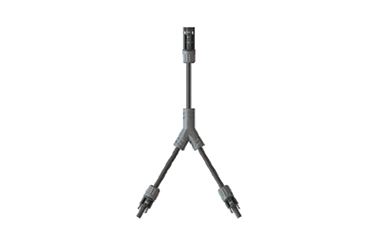
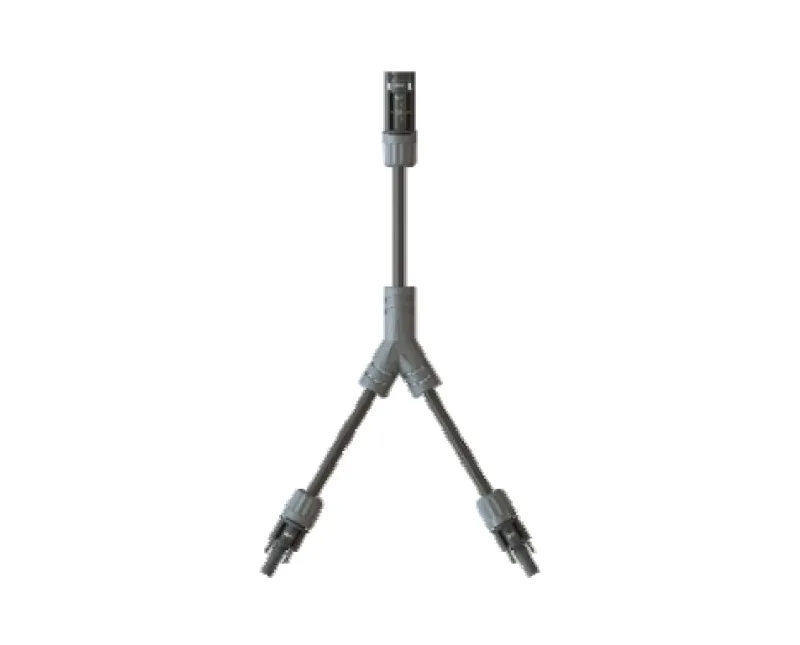
A Y-branch harness is a pre-assembled cable assembly that collects the outputs of two solar strings and combines them into one output. The input side carries two pairs of conductors; the output side carries one pair. The confluence happens inside a molded junction, not at a field-installed combiner box.
That factory assembly matters because the Y-junction is the most moisture-sensitive point in a parallel string connection. If water reaches the splice, corrosion raises resistance and the connection heats. The SH-Y series seals the junction to IP68, so the confluence stays dry even when the harness sits in a puddle or gets buried in snow.
What the Y Configuration Replaces
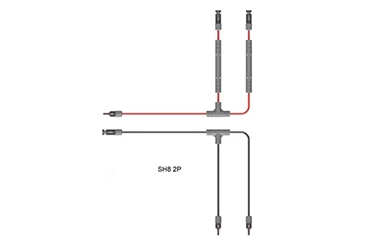
Without a Y-harness, two strings run separately to a combiner box or to two inverter inputs. That means two positive and two negative home runs, two sets of cable ties, and two termination points at each end. With a Y-harness, the two strings join at the array boundary, and one pair of conductors carries the combined current to the next stage.
The savings are not just cable cost. Every extra conductor is a chance for a polarity error, a loose lug, or a damaged insulation section during pulling. The Y-harness removes one pair of runs from the field workflow, which shortens commissioning and reduces the number of connections an inspector has to check.
What Electrical Ratings Define the Y-Branch?
1500V System Voltage and 70A Combined Output
The SH-Y series is rated UL1500V / IEC 1500V, covering the DC bus voltages used in modern commercial and utility-scale arrays. The maximum combined output current is 70A on the largest cable configuration, the SH-Y-0616, which pairs 2×10 AWG / 6mm² inputs with a 1×6 AWG / 16mm² output.
The contact resistance is ≤0.05mΩ. At 70A, that resistance produces less than 0.25W of heat at the junction—low enough that the molded housing stays cool and the insulation does not degrade from thermal cycling.
| Type | Input Cable | Output Cable | Input Current | Output Current |
|---|---|---|---|---|
| SH-Y-0202 | 2×14 AWG / 2.5mm² | 1×14 AWG / 2.5mm² | ≤2×25A | ≤1×25A |
| SH-Y-0606 | 2×12 AWG / 4mm² | 1×8 AWG / 10mm² | ≤2×35A | ≤1×40A |
| SH-Y-0410 | 2×12 AWG / 4mm² | 1×8 AWG / 10mm² | ≤2×35A | ≤1×50A |
| SH-Y-0616 | 2×10 AWG / 6mm² | 1×6 AWG / 16mm² | ≤2×40A | ≤1×70A |
Why Does IP68 Matter for a Y-Junction?
The Y-junction is a splice. It joins two conductors into one, and that joint is the point where moisture ingress would do the most damage. A standard connector seals at the mating interface, but the junction itself is a separate sealing challenge.
The SH-Y series seals the entire confluence assembly to IP68, meaning it withstands dust ingress and prolonged water immersion. That rating covers the condensation that forms inside a junction box, the rain that hits an exposed roof array, and the standing water that collects on a ground-mount rack after a storm.
The harness also carries UV resistance, so the molded housing and the cable jacket do not crack or chalk after years of sun exposure. UV degradation is a slow failure mode—the harness looks fine until the jacket becomes brittle and splits. The UV rating ensures the outer surface stays flexible through the service life.
Where Does a Y-Branch Harness Fit in Array Wiring?
A Solar Harness in the Y-branch configuration is used where two strings run in parallel before reaching a combiner box, an inverter, or the next level of aggregation. That covers residential rooftop arrays with two orientations, small commercial roofs where two strings land on a single MPPT, and ground-mount rows where pairs of strings combine at the end of a row.
The SH-Y series supports 2.5mm² to 240mm² cable ranges across the product family, though each Y-branch model is built for a specific input/output combination. The connector interface is MC4-compatible by default (A4 Max Solar Connector), with other solar connector options available on request.
What Should You Verify Before Ordering a Y-Harness?
How do I match the input and output current?
Check the per-string current against the input rating and the combined current against the output rating. The SH-Y-0616 accepts ≤2×40A on the inputs and delivers ≤1×70A on the output. If the two strings are unequal—one facing east, one facing west—the combined output current may be lower than the arithmetic sum, but the harness still has to carry the maximum possible combined current under the worst-case irradiance.
What cable gauge do I need for my run length?
The input gauge is fixed by the Y-branch model. The output gauge determines the voltage drop on the combined run to the inverter. A longer run needs a heavier output conductor to keep the voltage drop within the array's design limit. The SH-Y-0616 uses a 16mm² output, which supports longer runs than the 10mm² output on the SH-Y-0606.
What environmental conditions does the harness tolerate?
The operating temperature range is -40°C to +85°C. That window covers cold-climate winter conditions and the heat build-up inside a rooftop junction. The IP68 rating covers water immersion, and the UL94-V0 flame rating means the housing self-extinguishes if exposed to fire.
Straight Answers on Y-Branch Harnesses
Can the Y-harness handle 1500V systems?
Yes. The rated voltage is UL1500V / IEC 1500V, which matches the maximum system voltage for modern utility-scale and commercial arrays. Confirm the inverter's maximum DC input voltage against the 1500V rating before connecting the harness output.
What is the contact resistance at the junction?
The contact resistance is ≤0.05mΩ. That figure keeps the voltage drop negligible even at 70A, and it ensures the junction does not become a hot spot under continuous load.
Can the harness be used for more than two strings?
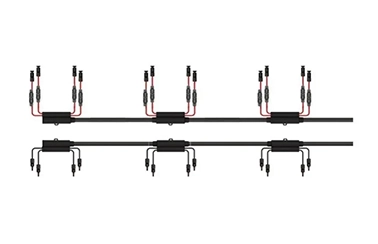
The SH-Y series is a two-to-one branch. For three or more strings, a multi-branch harness or a combiner box is the appropriate choice. The Y-branch is optimized for the two-string parallel case, which is the most common configuration in residential and small commercial arrays.
What certifications should the harness carry?
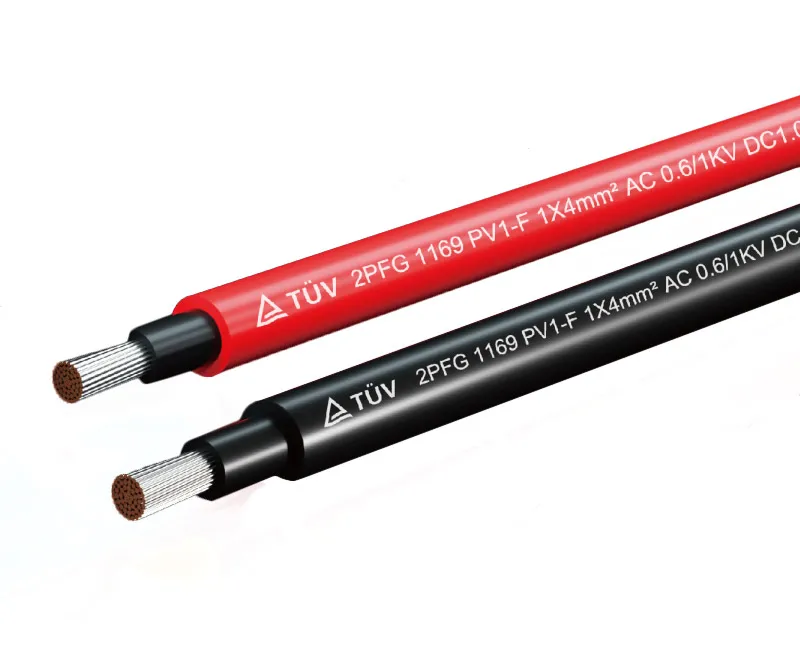
Look for TÜV and ETL qualification, along with the IEC 62852 and UL 9703 standards. Those certifications confirm that the harness has been tested to the solar-specific connector and cable standards, not just general-purpose electrical standards.
Let's Match a Y-Branch Harness to Your Array
Share Your String Current, Run Length, and Connector Type
A Solar Harness in the Y-branch format should match your per-string current, combined output current, and run length—not the other way around. The Solar Y Branch Harness from Suntree combines two string inputs into one output at UL1500V / IEC 1500V and up to 70A, with IP68 sealing, ≤0.05mΩ contact resistance, and -40°C to +85°C operating range. The SH-Y series covers input configurations from 2×14 AWG to 2×10 AWG, with output cables from 14 AWG to 6 AWG. If you're specifying a parallel-string connection for a rooftop or ground-mount array, send us your string current, run length, and connector type — we'll help you confirm the right Y-branch model before you order.