 English
 Deutsch
 Pусский
 Español
 Français
 Português
How Does a Solar Harness Combine Multiple Strings?


You're wiring a commercial rooftop array, and four separate strings need to land at the inverter — but the inverter has only one input per MPPT. Running four pairs of cables all the way to the inverter adds labor, clutter, and potential failure points. A Solar Harness solves that by combining multiple strings into a single output at a junction point, so one cable pair carries the combined current to the inverter. This article explains how the SH6 P Series handles 2 or 3 string inputs, what the fuse and current ratings mean, and what to verify when you're specifying a branch harness for a PV project.
What Does a Branch Harness Actually Do in a Solar Array?
String Aggregation at a Single Junction
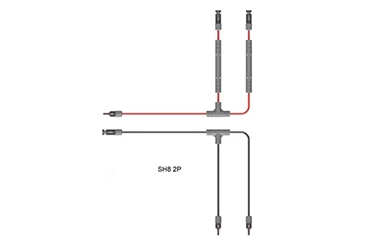
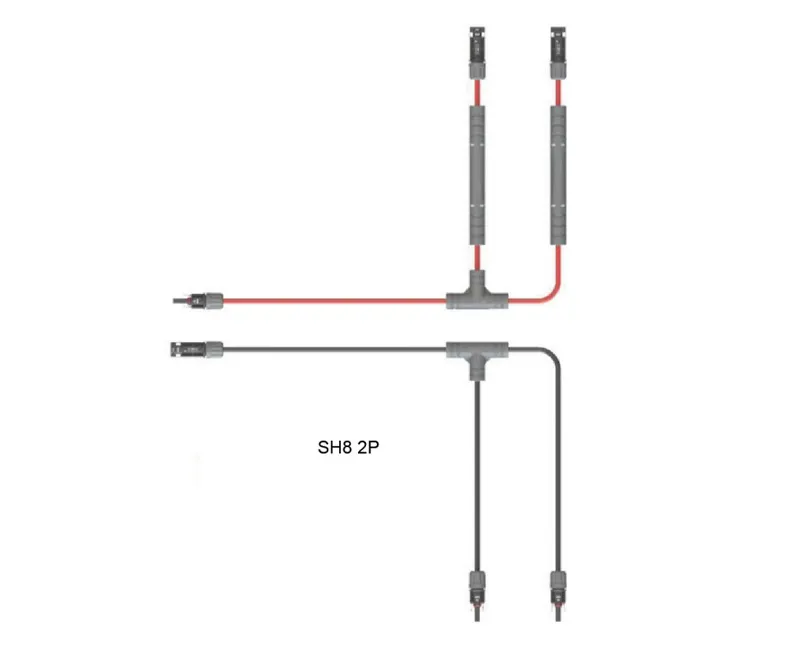
A branch harness is a pre-assembled cable assembly that collects the outputs of multiple solar strings and combines them into one output. The SH6 P Series is available in 2-string and 3-string configurations, with the string inputs on one side and a single output on the other. Each input has its own fuse, so a fault on one string doesn't affect the others.
The alternative is a combiner box. A combiner box performs the same aggregation function, but it's a separate enclosure that has to be mounted, wired, and maintained. A harness moves that aggregation into a sealed, factory-assembled cable assembly. There's no enclosure to mount, no terminal blocks to torque, and no separate enclosure to weatherproof.
Why Factory Assembly Reduces Field Labor
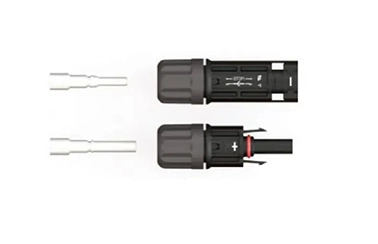
The harness is built and tested before it ships. The joints are resistance-welded, the fuses are installed, and the connectors are terminated. In the field, the installer connects the string leads to the harness inputs and the harness output to the inverter or the next junction. That's a fraction of the labor required to build a combiner box connection from discrete components.
The page describes the harness as reducing the specialized labor required in installation, making the integration of solar panels simpler, with both labor and material costs significantly reduced through custom manufacturing.
What Electrical Ratings Matter for a Branch Harness?
Junction Current and Fuse Protection
The rated voltage is IEC 1500V and UL 1500V. The junction rated current is max 70A. The maximum input rated current protection varies by fuse type: max 32A with A6 fuses, and max 50A with A6 B fuses.
Those numbers define the harness's operating envelope. The junction current of 70A is the total combined current the harness can carry on its output. The input protection rating is the per-string limit, set by the fuse installed in each input. If your string current exceeds the fuse rating, the fuse opens and isolates that string. That's the intended behavior — the fuse protects the harness and the downstream equipment from an overcurrent on a single string.
Contact Resistance and Insulation
The contact resistance is ≤0.05mΩ, which is low enough that the harness doesn't become a heat source in the circuit. The rated impulse voltage is 16kV, and the pollution degree and protection degree are both Class II. The fire resistance rating is UL94-V0.
| Parameter | SH6 P Series Specification |
|---|---|
| Configurations | 2-string or 3-string |
| Rated voltage | IEC 1500V / UL 1500V |
| Junction rated current | Max 70A |
| Max input protection (A6 fuse) | Max 32A |
| Max input protection (A6 B fuse) | Max 50A |
| Contact resistance | ≤0.05mΩ |
| Rated impulse voltage | 16kV |
| Protection degree | IP68 |
| Operating temperature | -40°C to +90°C |
| Fire resistance | UL94-V0 |
| Cable range | 4mm²–16mm² / 12AWG–6AWG |
| Fuse size | Standard up to 50A |
| Joint construction | Resistance welded |
| UV resistance | Yes |
How Does the Harness Survive Outdoor Exposure?
IP68 Sealing and UV-Resistant Materials
The harness carries an IP68 rating, which means it's protected against dust ingress and prolonged water immersion. For a rooftop or ground-mount array, that rating covers rain, condensation, and the occasional pooling of water at the mounting point.
The over-mold material is specified for outdoor use with respect to UV light exposure and water immersion, tested in accordance with UL 746A, 746B, and 746C. UV degradation is one of the main failure modes for exposed plastic components on a solar array. The harness's material selection addresses that failure mode directly.
Temperature Range and Thermal Cycling
The operating temperature range is -40°C to +90°C. That window covers the surface temperatures a rooftop harness can see in summer and the cold-soak temperatures in winter. The resistance-welded joints are the critical points under thermal cycling — a soldered joint can crack when the two sides expand and contract at different rates, while a welded joint fuses the metals into a single structure.
Where Does a Branch Harness Fit in a PV Project?
Rooftop, Ground-Mount, and Distributed Arrays
A Solar Harness like the SH6 P Series fits where multiple strings need to combine before reaching the inverter. That includes commercial rooftop arrays with several orientations, ground-mount projects where strings are spread across rows, and distributed generation sites where the inverter is centrally located.
The available cable configurations cover the common string sizes. The SH6 2P-a has 2×4mm² inputs and a 1×10mm² output. The SH6 2P-b has 2×6mm² inputs and a 1×16mm² output. The SH6 3P-a has 3×4mm² inputs and a 1×16mm² output. Each configuration matches a different balance of string current and combined output current.
Suntree also produces related junction and fuse products for these arrays, including the SH-I Junction and the SA6 B Mini Fuse Unit, which share the same approach to sealing and current transfer.
What Should You Verify Before Ordering a Harness?
How do I match the harness to my string configuration?
Count your strings and their current. A 2-string harness handles two inputs; a 3-string harness handles three. Check that the per-string current falls within the fuse rating — 32A for A6 fuses or 50A for A6 B fuses. Then check that the combined output current falls within the 70A junction rating. If your combined current exceeds 70A, the harness is undersized for the application.
What cable size do I need?
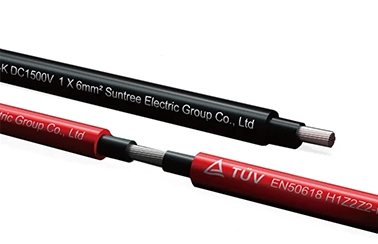
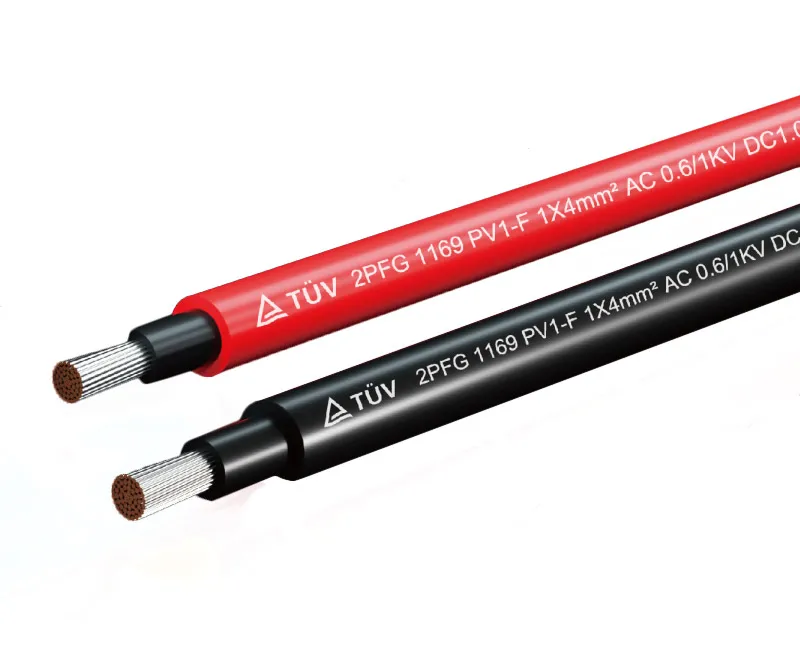
The input and output cable sizes are fixed by the part number. The 2P-a uses 4mm² inputs and a 10mm² output; the 2P-b uses 6mm² inputs and a 16mm² output; the 3P-a uses 4mm² inputs and a 16mm² output. Match the input cable size to your string conductor and the output cable size to the current the combined string will carry. If your string conductor is 6mm², the 2P-b is the configuration to consider.
What fuse type should I specify?
The A6 fuse is rated for max 32A per input; the A6 B fuse is rated for max 50A per input. The fuse choice depends on the string's maximum current and the protection coordination with the inverter. A higher-current string needs the A6 B fuse; a lower-current string can use the A6. Confirm the fuse rating against the string's short-circuit current and the inverter's input rating.
What maintenance does a harness need?
Inspect the connectors and the over-mold for cracks, discoloration, or water ingress during periodic array inspections. Check the fuse holders for corrosion and verify that the fuses are seated. The resistance-welded joints are sealed inside the over-mold and aren't serviceable — if a joint fails, the harness is replaced as a unit. That's the trade-off of the sealed construction: no field maintenance inside the junction, but no field failure points either.
Straight Answers on Solar Harness Selection
What's the difference between a harness and a combiner box?
A harness combines strings in a sealed cable assembly; a combiner box combines strings inside an enclosure with terminal blocks and separate fuses. A harness eliminates the enclosure, the mounting, and the field wiring between the strings and the aggregation point. A combiner box allows more flexibility in string count and fuse configuration. For projects where the string count is fixed and the goal is to reduce field labor, the harness is the simpler solution.
Can the harness be customized for a specific site?
The page notes that harnesses are custom manufactured for specific sites, which reduces both labor and material costs. The standard part numbers cover the common 2-string and 3-string configurations, but a project with unusual cable lengths or a specific connector requirement can be served with a custom assembly.
Why are the joints resistance-welded instead of soldered?
Resistance welding fuses the metals at the joint interface, creating a connection that doesn't rely on a filler alloy. Under thermal cycling, a welded joint maintains its electrical and mechanical integrity better than a soldered joint, which can crack at the boundary between the solder and the parent metal. The harness's ≤0.05mΩ contact resistance reflects the quality of that welded connection.
What does the IP68 rating cover?
IP68 means the enclosure is dust-tight and protected against prolonged immersion in water. For a solar harness, that rating covers rain, sprinkler overspray, and the water pooling that can occur at a roof mounting point. The mating connectors and the over-molded junction are the points that must maintain the seal; if a connector is damaged or a fuse holder is left open, the IP68 protection is compromised.
Let's Match a Branch Harness to Your Array Layout
Share Your String Count and Current
A Solar Harness should match your string count, per-string current, and combined output current — not the other way around. The SH6 P Series Crystal Harness from Suntree offers 2-string and 3-string configurations, 1500V IEC/UL ratings, a 70A junction current, per-input fuse protection up to 50A, IP68 sealing, and resistance-welded joints in a UV-resistant over-mold. Cable options run from 4mm² to 16mm². If you're specifying a branch harness for a commercial rooftop or ground-mount array, send us your string count and current — we'll help you confirm the right configuration before you order.