 English
 Deutsch
 Pусский
 Español
 Français
 Português
How Does a Solar Connector Prevent Corrosion on Aluminum Cables?


Utility-scale solar farms are switching from copper to aluminum cables to cut material costs and reduce weight across long cable runs. But aluminum brings a problem that copper doesn't have: when aluminum contacts copper in a standard connector, galvanic corrosion eats away at the aluminum, driving up resistance and creating a fire risk. A Solar Connector built specifically for aluminum cables solves that problem by managing the copper-to-aluminum transition internally. This article explains why standard connectors fail on aluminum cables, how a transition pin works, and what to verify when you're specifying connectors for an aluminum PV system.
Why Do Standard Connectors Fail on Aluminum Cables?
The Galvanic Corrosion Problem
Standard MC4 connectors are designed for copper wires. When you connect aluminum wire directly to a standard copper terminal, the two metals sit in contact with each other, and in the presence of moisture — which is inevitable in outdoor solar installations — they form a galvanic cell. The aluminum becomes the anode and corrodes. Over time, the contact surface pits, resistance rises, and the connection heats up.
That heating accelerates the corrosion, which drives resistance higher, which generates more heat. The cycle can end in a melted connector or an electrical fire. This isn't a hypothetical risk — it's a well-documented failure mode in installations where aluminum conductors were connected to copper terminals without a proper transition.
Why Aluminum Is Worth the Trouble
Despite the corrosion challenge, aluminum cables offer real advantages for utility-scale solar. Aluminum costs less than copper per meter, and it weighs roughly 30% less for the same current-carrying capacity. On a large solar farm where cable runs stretch hundreds of meters, that weight reduction translates to less structural support, easier handling, and lower installation labor. The material cost savings across a utility-scale project can be significant.
The solution isn't to avoid aluminum — it's to use connectors that are engineered for it.
How Does a Copper-Aluminum Transition Connector Work?
The Bimetal Pin Design
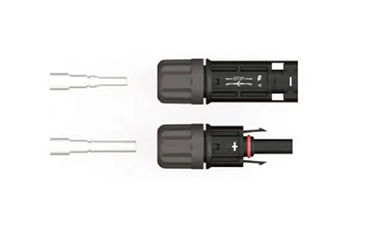
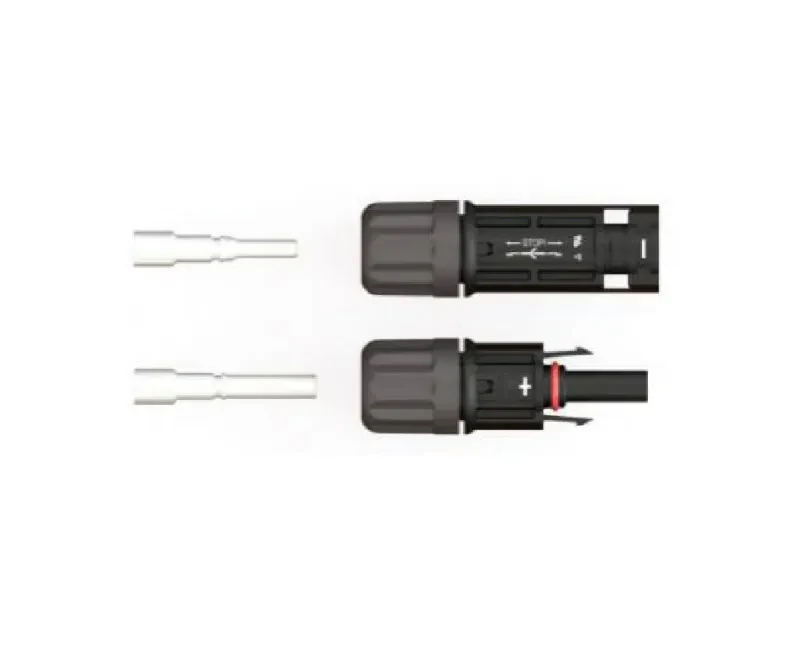
A solar connector for aluminum cables uses a copper-aluminum transition pin — a composite part that bonds copper and aluminum together under controlled conditions at the factory. The aluminum cable crimps to the aluminum end of the pin, and the copper end forms the mating contact with the opposing connector. The transition between the two metals happens inside the pin, where the bond is engineered to prevent moisture from reaching the interface.
The PMCN series adopts multiple patented technologies, including copper-aluminum transition composite process parts, wire welding process, cable fastening process, and adhesive sealing process. That combination of patents is what makes the transition reliable over the long term. The crimp connection ensures a secure mechanical and electrical bond between the aluminum cable and the transition pin.
What the Electrical Performance Looks Like
The PMCN connector for aluminum cables carries a rated voltage of 1500V DC under both IEC and UL standards, with a maximum rated current of 70A. The contact resistance is less than 0.35 mΩ, which keeps voltage drop low and heat generation minimal even at full load. The test voltage is 8kV at 5Hz for 1 minute, confirming the insulation can withstand transient overvoltages.
| Parameter | PMCN Solar Connector for Aluminum Cables |
|---|---|
| Rated voltage | 1500V DC (IEC & UL) |
| Rated current | Max. 70A |
| Contact resistance | <0.35 mΩ |
| Cable compatibility | 6.0mm² to 16mm² Al alloy cables |
| Test voltage | 8kV (5Hz, 1min) |
| Degree of protection | IP68 |
| Operating temperature | -40°C to +85°C |
| Insulation material | PPE |
| Terminal material | Copper, tin plated |
| Flame class | UL94-V0 |
| Safety class | II |
| Connecting system | Crimp connection |
| Insertion / withdrawal force | ≤50N / ≥50N |
What Does IP68 Sealing Add to the Connection?
Moisture Exclusion at the Transition Point
The copper-aluminum transition is the most corrosion-sensitive part of the connector. If moisture reaches that interface, the galvanic reaction can still occur even with the bimetal pin. The PMCN connector uses an adhesive sealing process that bonds the housing to the cable and seals the transition zone from the environment.
The IP68 rating means the connector resists dust ingress and prolonged immersion in water. For solar installations, that rating covers rain, condensation, and the occasional flooding of a ground-mounted array. The sealing also prevents moisture from migrating along the cable strands into the crimp zone.
Temperature and UV Performance
The operating temperature range is -40°C to +85°C, covering the full range of outdoor installation conditions from cold-climate arrays to desert solar farms. The insulation material is PPE, a thermoplastic with good electrical insulation properties and resistance to UV degradation. The flame class is UL94-V0, meaning the material self-extinguishes when the flame source is removed.
A Solar Connector that's built for aluminum cables has to combine the transition technology with environmental sealing that holds up for the life of the installation. A Solar Connector like the PMCN series from Suntree uses the copper-aluminum transition pin, IP68 sealing, and PPE housing to cover both requirements.
Where Do Aluminum Cable Connectors Get Used?
Utility-Scale Solar, Ground Mounts, and Long Cable Runs
Aluminum cable connectors show up wherever cable runs are long enough that the weight and cost savings outweigh the handling challenges. Utility-scale solar farms are the primary application — the DC home runs from the array to the inverter can stretch hundreds of meters, and the cable weight adds up fast. Ground-mounted arrays and solar farms in remote locations also benefit from the lighter cable and lower material cost.
-
Utility-scale solar farms — DC cable runs from array to inverter with aluminum conductors
-
Ground-mounted PV arrays — long string runs where cable weight affects support structure design
-
Remote solar installations — off-grid and microgrid projects where aluminum cable is the practical choice
-
Solar-plus-storage projects — DC connections between the array, battery bank, and inverter
-
Large commercial rooftops — wide arrays with extended cable paths
A Solar Connector like the PMCN series from Suntree is built for these applications. Suntree produces the PMCN connectors in a range that covers 6.0mm² to 16mm² aluminum alloy cables, with the copper-aluminum transition pin and IP68 sealing that make the connection reliable in outdoor environments. The company supports original equipment manufacturing and provides samples for testing before full production.
What Do Installers Ask About Aluminum Connectors?
Can I use a standard connector with an aluminum-to-copper adapter?
An adapter that transitions from aluminum to copper outside the connector body leaves the transition exposed to moisture and air. The PMCN design puts the transition inside the sealed connector, where the bimetal bond is protected from the environment. An external adapter adds a failure point without the sealing that the internal transition provides.
What cable sizes does the PMCN connector support?
The PMCN connector for aluminum cables supports 6.0mm² to 16mm² aluminum alloy cables. That range covers the common conductor sizes used in utility-scale solar DC wiring. Check your cable's actual cross-section against this range before ordering, and verify that the crimp tooling matches the cable size.
How do I know the connection is properly sealed?
The adhesive sealing process bonds the housing to the cable jacket, so the seal is established when the connector is assembled. After crimping, check that the housing is fully seated and the adhesive has bonded to the cable jacket. The IP68 rating applies to a properly assembled connector — an incomplete crimp or a damaged housing can compromise the seal.
What's the difference between the PMCN and a standard MC4?
A standard MC4 is designed for copper conductors. The PMCN uses a copper-aluminum transition pin that allows aluminum cables to connect to the copper contact system without galvanic corrosion. The PMCN also uses adhesive sealing and patented transition technology that a standard MC4 doesn't have. If you're running aluminum cables, the PMCN is the connector designed for that application.
Let's Match Connectors to Your Aluminum PV System
Share Your Cable Size and System Voltage
A Solar Connector for aluminum cables should match your conductor size, system voltage, and environmental exposure. The PMCN Connectors for Al cables from Suntree handle 6.0mm² to 16mm² aluminum alloy cables at 1500V DC and up to 70A, with copper-aluminum transition pins, IP68 sealing, and UL94-V0 flame-rated PPE housing. If you're specifying connectors for a utility-scale or commercial solar installation using aluminum conductors, send us your cable size and system parameters — we'll help you confirm the right connector before you order.