 English
 Deutsch
 Pусский
 Español
 Français
 Português
Can a Solar Connector Survive Salt Mist Spray?


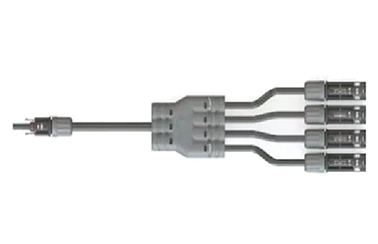
Solar installations don't always sit in sunny, dry fields. Coastal solar farms, offshore platforms, and marine-adjacent sites expose every connection to salt-laden air that corrodes metal, degrades insulation, and turns a reliable connector into a failure point. A Solar Connector rated only for ordinary outdoor conditions won't survive that environment for long. The PMBC nB1 Series PMBC n to 1 Connectors were engineered with a salt mist spray test rating of severity level 5, meeting IEC 60068-2-52 requirements. This article explains what that rating means in practice, how IP68 waterproofing and UV-resistant materials work together to protect connections, and what to verify before specifying branch connectors for coastal or industrial PV installations.
Key Questions PV Installers Ask Before Choosing Connectors
Environmental Protection and Temperature Range
Q: What protection rating does the connector carry when mated?
A: The PMBC nB1 Series achieves IP68 protection when mated, meaning it's dust-tight and protected against continuous immersion in water. When unmated, the protection rating is IP2X, which prevents finger contact with live parts. For outdoor installations exposed to rain, snow, and humidity, the IP68 rating ensures the connection remains sealed.
Q: What temperature range can the connector operate in?
A: The operating temperature range is -40°C to +90°C under IEC standards and -40°C to +75°C under UL standards. The upper limiting temperature is +105°C (IEC). This range covers installations from cold climate zones to hot desert environments.
Contact Resistance and Current Capacity
Q: What is the contact resistance and rated current?
A: The contact resistance of the plug connectors is 0.5mΩ. The rated voltage is 1000V DC (IEC), and the rated current is 30A. The lower contact resistance and higher current transfer capability ensure high product efficiency. The connector system uses a Φ4mm contact diameter.
Why Salt Mist Resistance Matters for Coastal and Industrial Solar
Salt mist is one of the most aggressive environmental threats to solar connectors. In coastal areas, airborne salt particles settle on surfaces and, when combined with moisture, create a highly corrosive electrolyte. This electrolyte attacks the metal contacts, corrodes the housing, and can eventually cause connection failure. The PMBC nB1 Series is tested to IEC 60068-2-52 with a salt mist spray severity level of 5. This test simulates prolonged exposure to salt-laden atmospheres, verifying that the connector's materials and sealing system resist corrosion. The contact material is copper alloy, tin-plated (Messing, verzinnt), and the insulation material is PC/PA—both selected for durability in harsh environments.
What the Salt Mist Test Actually Simulates
IEC 60068-2-52 severity level 5 represents an aggressive salt spray environment. The test exposes the connector to a continuous salt fog for an extended period, then evaluates corrosion, electrical performance, and mechanical integrity. Passing this test confirms that the connector can withstand coastal installations where salt deposition is a daily reality.
UV Resistance and Material Durability
Beyond salt mist, outdoor connectors face constant UV exposure. The PMBC nB1 Series features UV resistance, preventing the housing from becoming brittle or cracking under prolonged sunlight. The PC/PA insulation material and the overall construction are designed to maintain performance across years of outdoor service.
Technical Specifications at a Glance
| Parameter | Specification |
|---|---|
| Connector System | Φ4mm |
| Rated Voltage | 1000V DC (IEC) |
| Rated Current | 30A |
| Test Voltage | 6kV (50Hz, 1min) |
| Ambient Temperature (IEC) | -40°C to +90°C |
| Ambient Temperature (UL) | -40°C to +75°C |
| Upper Limiting Temperature | +105°C (IEC) |
| Degree of Protection (Mated) | IP68 |
| Degree of Protection (Unmated) | IP2X |
| Contact Resistance | 0.5mΩ |
| Safety Class | II |
| Contact Material | Copper alloy, tin-plated |
| Insulation Material | PC/PA |
| Locking System | Snap-in |
| Flame Class | UL94-V0 |
| Salt Mist Spray Test | IEC 60068-2-52, severity 5 |
What the n-to-1 Configuration Delivers
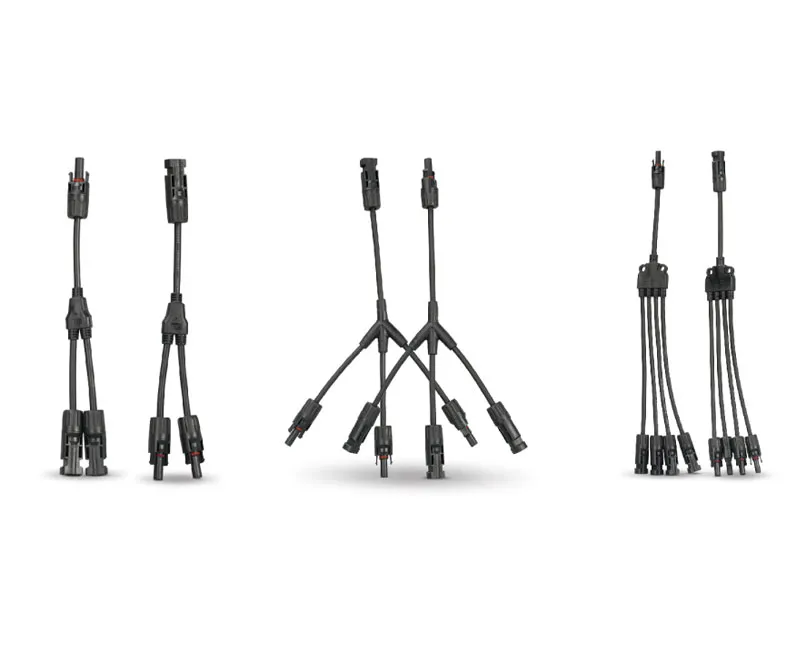
The PMBC nB1 Series is an n-to-1 connector, meaning it consolidates multiple inputs into a single output. This configuration is used for parallel connection of solar panels, allowing multiple strings to be combined before routing to the inverter or combiner box. The connector matches PMBC series branch connectors and can be widely used in different applications.
Locking System and Safety Features
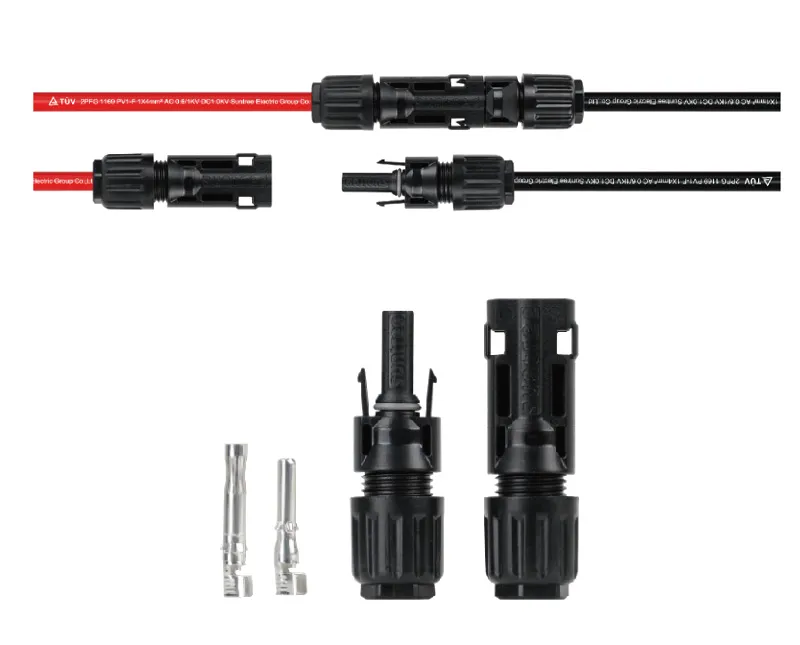
The connector uses a snap-in locking system, providing secure mating without tools. The safety class is II, and the flame class is UL94-V0, meaning the material self-extinguishes within 10 seconds after ignition with no flaming drips.
Where n-to-1 Connectors Fit in PV Array Design
The PMBC nB1 Series serves PV installations where multiple strings need to be combined efficiently. In a typical solar array, panels are wired in series to form strings, and strings are then paralleled to increase current. The n-to-1 configuration consolidates the parallel connections into a single output, reducing the number of cable runs to the inverter or combiner box. This simplifies wiring, reduces material costs, and improves the overall organization of the array.
Rooftop and Ground-Mount Arrays
On rooftop installations, space is limited and cable routing must be tidy. The n-to-1 connector consolidates parallel strings at the array level, reducing the number of cables that must be routed to the inverter. On ground-mount sites, the same connector simplifies wiring across long distances.
Coastal and Marine Installations
The salt mist resistance and IP68 rating make the PMBC nB1 Series suitable for coastal solar farms, offshore platforms, and marine-adjacent installations. The connector's materials resist corrosion and maintain electrical performance in these demanding environments.
[H3] Industrial and Utility-Scale Projects
For utility-scale solar projects, the reliability of every connection affects overall system performance. The 0.5mΩ contact resistance and 30A rated current support the current levels used in commercial and utility-scale arrays.
Common Questions About Branch Connector Selection
Q: What does IP68 actually mean for a solar connector?
A: IP68 is the highest common ingress protection rating. The "6" means complete protection against dust ingress. The "8" means protection against continuous immersion in water under conditions specified by the manufacturer. For solar connectors installed outdoors, IP68 ensures that rain, snow, and humidity don't compromise the electrical connection.
Q: Why does contact resistance matter in a solar connector?
A: Contact resistance creates voltage drop and heat. In a solar array with dozens of connections, even small resistance at each point adds up to measurable power loss. The PMBC nB1 Series achieves 0.5mΩ contact resistance, minimizing energy loss and reducing heat generation at the connection point.
Q: What is the difference between IEC and UL temperature ratings?
A: The IEC rating covers -40°C to +90°C, while the UL rating covers -40°C to +75°C. The difference reflects the different test conditions and safety margins required by each standard. For installations in regions covered by UL requirements, the UL rating applies.
Q: How does the snap-in locking system work?
A: The snap-in locking system provides tool-free mating and secure connection. Once the connector is fully inserted, the locking mechanism engages, preventing accidental disconnection from vibration or thermal cycling.
Request a Branch Connector Configuration
A Solar Connector with IP68 waterproofing, salt mist spray test compliance, and 0.5mΩ contact resistance is the practical choice for PV installations exposed to coastal, industrial, or humid environments. The PMBC nB1 Series PMBC n to 1 Connectors from SUNTREE deliver IP68 protection when mated, -40°C to +90°C operating temperature range, 1000V DC rated voltage, 30A rated current, 0.5mΩ contact resistance, IEC 60068-2-52 severity 5 salt mist resistance, UV resistance for outdoor durability, snap-in locking for secure connections, and UL94-V0 flame class for safety.
Whether you're designing rooftop arrays, ground-mount farms, or coastal installations, this n-to-1 connector offers the environmental protection and electrical performance that reliable PV systems demand. With compatibility across PMBC series branch connectors, it adapts to different array configurations.
Contact SUNTREE for a branch connector configuration assessment → their team can help you select the right n-to-1 configuration, quantity, and accessories for your specific array layout and environmental conditions. Get a connector that survives salt mist, UV exposure, and temperature extremes—so your PV system performs for decades.
-0943.webp)