 English
 Deutsch
 Pусский
 Español
 Français
 Português
How Does an Integrated Solar Harness Combine Multiple Strings?


You’re laying out a commercial rooftop or ground-mount array, and you have four separate strings that need to reach the inverter. Running four pairs of DC cables all the way to the inverter room means four home runs, four sets of conduit, and four times the chance for a loose connection or a polarity error. A Solar Harness with integrated confluence solves that by combining those strings into a single fused output at the array boundary. This article explains how the integrated confluence works, what the built-in protection contributes, and what to verify when you’re specifying a multi-string harness for your PV project.
What Does Integrated Confluence Actually Do?
Aggregating Multiple Inputs at the Array Edge
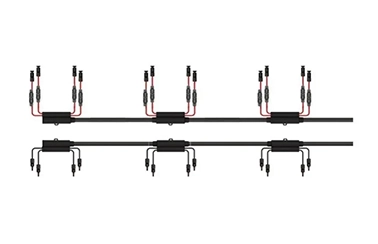
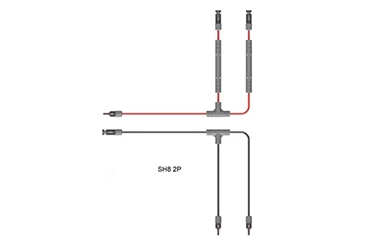
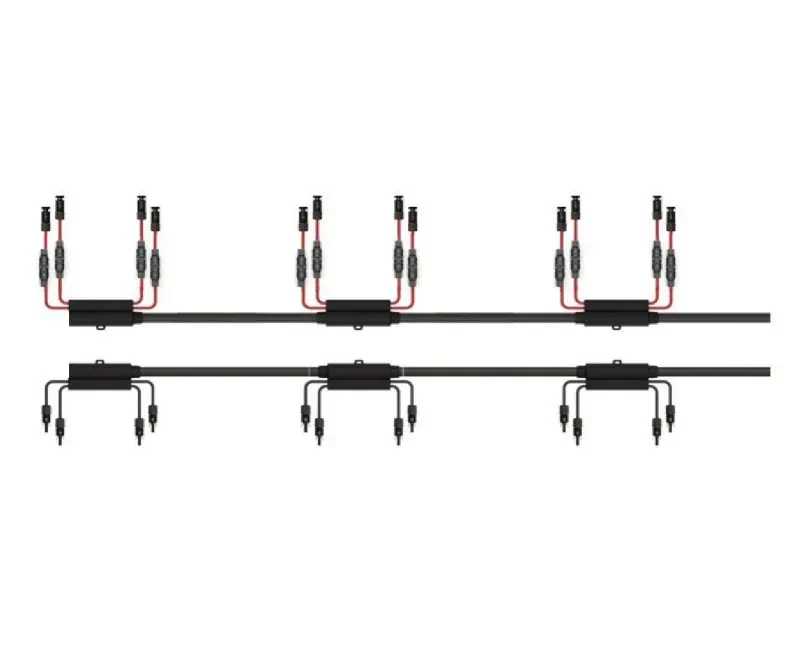
An integrated confluence harness is a factory-assembled cable assembly that collects the outputs of multiple solar strings and merges them into one output. Instead of running each string individually back to the inverter, the harness sits at the array and performs the aggregation there.
That shift in location is the core value. The heavy, multi-conductor cable run happens once—from the harness output to the inverter—rather than four separate times. The field crew connects the string leads to the harness inputs, and the harness handles the rest.
Reducing Wiring at the Inverter
When four strings arrive at the inverter individually, the installer has to land eight DC conductors (four positive, four negative) plus the associated grounding and monitoring wires. When the same four strings arrive through a single confluence harness, the inverter sees one pair of DC conductors.
That reduction simplifies the inverter connection, shortens the commissioning time, and reduces the number of terminals that can loosen or corrode over the life of the system. For a large array with dozens of strings, the cumulative time saving is substantial.
What Protection Is Built Into the Harness?
Fuse Protection per String
An integrated confluence harness typically includes a fuse on each input string. The fuse isolates a faulted string without taking down the entire array. If one string develops a short circuit or a ground fault, its fuse opens, and the remaining strings continue to feed the inverter.
That per-string protection is what allows the harness to replace a conventional combiner box in many installations. The combiner box performs the same aggregation and fusing function, but it requires a separate enclosure, mounting hardware, and field wiring. The harness integrates those functions into a sealed, factory-tested assembly.
Sealed Junction for Outdoor Durability
The confluence point—where the multiple inputs merge into the single output—is the most critical part of the harness. If moisture reaches that junction, the result is corrosion, resistance drift, and eventually a failure.
The harness uses an over-molded or sealed junction that is rated to IP68. That rating covers dust ingress and prolonged water immersion, which means the harness can sit on a rooftop or a ground-mount rack through rain, snow, and standing water without letting moisture reach the conductors.
| Feature | Integrated Confluence Harness (Typical) |
|---|---|
| Inputs | 2, 3, or 4 string pairs (model-dependent) |
| Output | Single positive and negative pair |
| Rated voltage | 1500V DC (IEC/UL) |
| Fuse rating | Per-string, typically 15A or 20A |
| Sealing | IP68 at the junction and connectors |
| Cable | 4mm² or 6mm² string inputs; 10mm² or 16mm² output |
| Temperature range | -40°C to +90°C |
| UV resistance | Yes (over-mold material) |
Where Does the Integrated Harness Save Installation Time?
Rooftop and Ground-Mount Arrays
On a commercial rooftop, the array is often spread across multiple roof sections or orientations. Each section produces its own string, and those strings need to be combined before the run to the inverter. The integrated harness mounts at the roof level, collects the strings from each section, and sends a single pair of conductors down to the inverter.
On a ground-mount array, the same logic applies across rows. The harness sits at the end of a row, collects the row’s strings, and feeds the combined output to the next row or to the inverter. The result is a tidier cable layout with fewer long home runs.
Reducing Field Labor and Material Cost
The harness is built and tested at the factory. The joints are welded or crimped under controlled conditions, the fuses are installed, and the connectors are terminated. In the field, the installer connects the string leads and the output. That’s a fraction of the labor required to build a combiner box connection from discrete components, and it eliminates the separate enclosure, mounting brackets, and terminal blocks.
What Electrical Ratings Should You Verify?
Voltage and Current Ratings
The harness must be rated for the system voltage. For a 1500V DC array, the harness must carry a 1500V rating under both IEC and UL standards. The current rating depends on the number of strings and the per-string current. A 4-string harness with 15A per string carries 60A on the output, so the output cable and connectors must be sized for that combined current.
Temperature and Environmental Ratings
The operating temperature range should cover the installation environment. A rooftop harness can see surface temperatures well above ambient in summer, and a ground-mount harness can see freezing conditions in winter. The -40°C to +90°C range covers most installations. The IP68 rating covers the moisture exposure, and the UV-resistant over-mold protects against sunlight degradation.
Straight Answers on Integrated Solar Harnesses
Can the harness handle 1500V systems?
Yes, when specified with the 1500V rating. The IEC and UL standards both define 1500V as the maximum system voltage for modern utility-scale and commercial arrays. Confirm the rating on the specific harness model before connecting it to a 1500V string.
How is the fuse accessed for replacement?
The fuse holders are integrated into the harness body and are accessible through a sealed cover or a plug-in arrangement. The exact access method depends on the model. Confirm the fuse replacement procedure and the required tools with the manufacturer before installation.
What cable sizes are available?
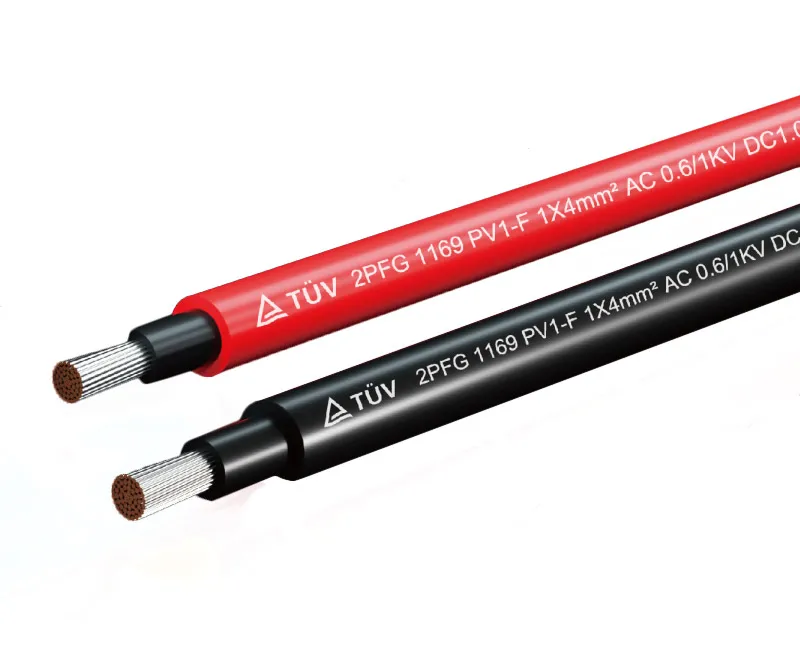
The input cables are typically 4mm² or 6mm², matching the string conductor size. The output cable is sized for the combined current—10mm² or 16mm² depending on the number of strings and the per-string current. Match the output cable to the inverter’s input terminal capacity.
Does the harness require specialized tools?
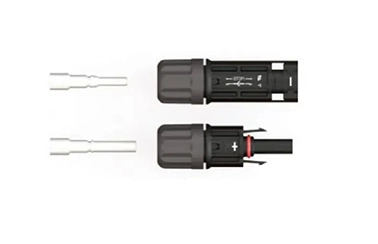
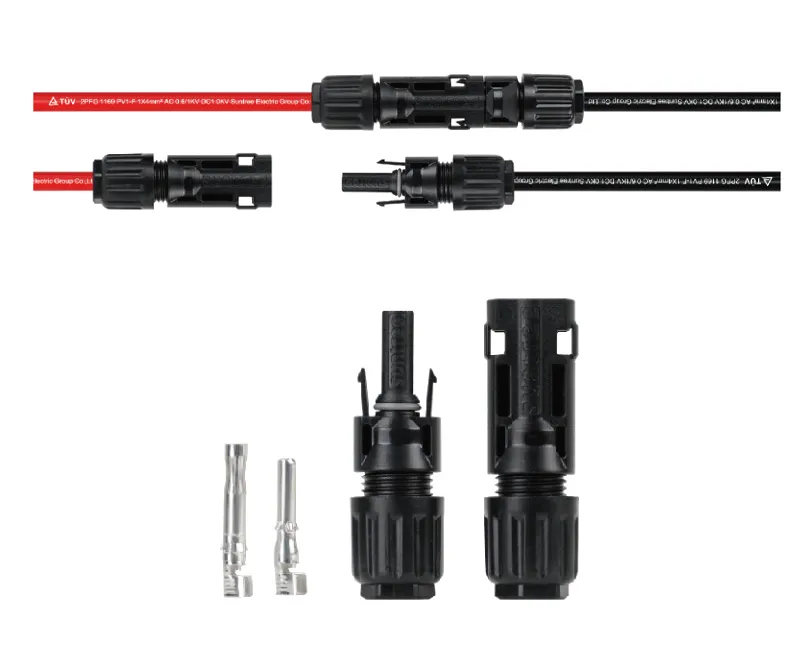
The connectors are typically standard MC4-compatible, so the same crimping and assembly tools used for other PV connectors apply. The fuse replacement may require a specific tool or a sealed cover removal procedure. Confirm the tooling requirements at the ordering stage.
Let’s Match an Integrated Harness to Your Array
Share Your String Count and System Voltage
A Solar Harness with integrated confluence should match your string count, system voltage, and output current—not the other way around. The SH6 Galaxy Series Integrated Confluence from Suntree merges 2 to 4 string pairs into a single output at 1500V DC, with per-string fusing, IP68 sealing, and UV-resistant over-molding. If you’re specifying a harness for a commercial rooftop or ground-mount array, send us your string count and system voltage — we’ll help you confirm the right configuration before you order.