 English
 Deutsch
 Pусский
 Español
 Français
 Português
What Do Spec Sheets Never Tell You About a Cable?


Yes, a datasheet shows ampacity, voltage rating, and material. But it doesn’t reveal what happens after 500 freeze‑thaw cycles or continuous UV exposure. It doesn’t tell you whether the manufacturer actually designed the product or just repackaged generic components. This guide walks through the hidden factors that determine real‑world reliability – R&D integration, testing capability, production scale, and more – using published data from an experienced manufacturer.
Instead of a glossy catalog, ask these three questions
A beautiful brochure can promise the world. But real reliability comes down to three questions that no spec sheet answers. Here’s what to ask before you commit to a cable supplier.
Who really designs the product?
Some suppliers buy ready‑made components from third parties and simply repackage them. Others invest in their own research and development, creating custom materials and processes for demanding applications. The difference shows up in failure rates over time. A manufacturer with in‑house R&D can adjust formulations when problems arise; a repackager can only swap to another generic part.
Testing that goes beyond a stamp on a box
Anyone can claim “high quality.” A real producer has an in‑house lab with environmental chambers, electrical test gear, and material analysis equipment. Ask to see it. If they hesitate or offer only paper certificates, be cautious. Independent lab reports are valuable, but daily internal testing ensures every batch meets the same standard.
Can they handle your volume?
Multiple coordinated facilities usually mean better supply stability, especially for large or urgent orders. A single small shop might struggle to scale up, leading to delays or inconsistent quality. For a factory running 24/7, a partner that can’t keep up will cost you more than the price per meter.
The Basics of Wire and Conductor Selection
Not every electrical wiring system works for every environment. Here’s what actually matters when you get into the details.
| Component | What to look for | Why it matters |
|---|---|---|
| Conductor material | Oxygen‑free copper | Better conductivity, fewer hot spots |
| Insulation & jacket | PVC, XLPE, TPU, silicone – matched to environment | Heat, moisture, UV, and chemical resistance |
| Shielding | Braid, foil, or both | Blocks interference from VFDs, servo drives, radio signals |
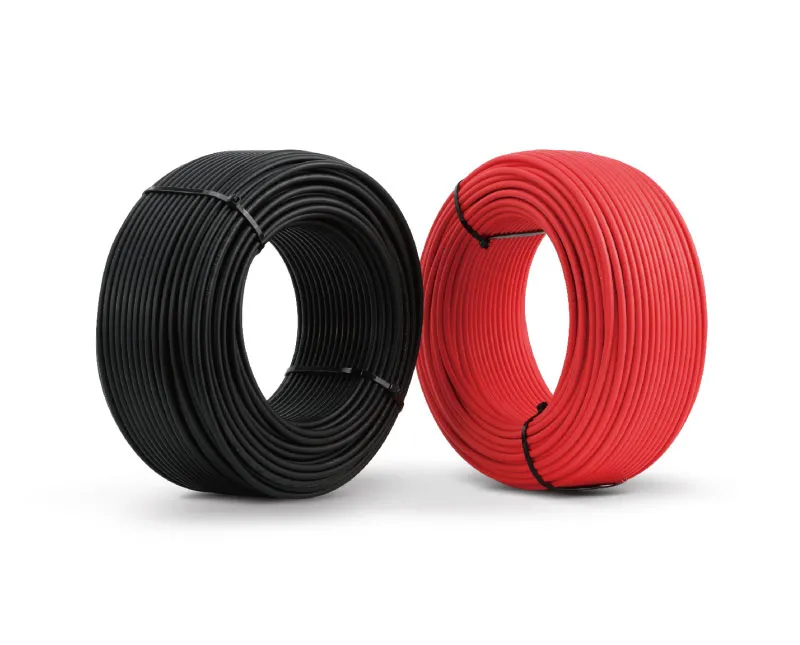
Conductor material – purity is not optional
Oxygen‑free copper conducts better and resists corrosion longer than standard copper, which may contain impurities that create hot spots over time. For a cable that needs to last decades, this detail matters.
Insulation and jacket – the first line of defense
Heat kills wiring. So does moisture, UV, and chemicals. A cable rated for indoor control panels may last only months on a sunny rooftop. Different environments need different compounds – PVC for general use, XLPE for high heat, TPU for abrasion, silicone for extreme flexibility. A good manufacturer recommends based on your actual operating conditions, not just what’s in stock.
Shielding – keeping noise out
In noisy industrial settings (VFDs, servo drives, radio signals), unshielded conductors act like antennas. Braided shields block most interference; foil shields provide 100% coverage but are less flexible. For critical signals, use both.
Putting Published Data to the Test
Now let’s look at an actual producer. These are published figures, not sales talk.
SUNTREE has been building electrical conductor products for nearly 20 years. Their approach focuses on closing the gap between R&D and production.
| Capability | Detail |
|---|---|
| Industry experience | Nearly 20 years |
| R&D team | 50+ professionals (electrical, material, mechanical) |
| Project database | 500+ projects in extreme environments worldwide |
| Intellectual property | 300+ patents and certifications |
| Quality certification | ISO 9001:2015 |
| Production layout | Multiple coordinated bases for large‑scale output |
What these numbers tell you: 50+ R&D people means they’re not outsourcing their thinking. 500+ projects means they’ve probably seen your failure mode before. 300+ patents means they innovate, not just assemble. Multi‑base production means lower costs and the ability to handle big orders without delays.
Why Keeping R&D and Production Together Matters
Many wire and cable manufacturers design in one place and produce in another – sometimes in different countries. That gap kills speed. A design change that should take days can stretch into weeks. Translation errors between engineering and factory floors lead to subtle defects.
SUNTREE keeps R&D and production tightly integrated. When the lab develops a new insulation material or extrusion process, it goes straight to the factory floor. No handoff delays. No translation loss. For you, that means shorter development cycles, faster time to market, and quicker response when you need a custom solution.
Materials, Processes, and Smart Conductors
Advanced extrusion and insulation
Heat kills wiring. So does moisture. SUNTREE uses advanced extrusion processes that maintain tight tolerances on wall thickness. They select high‑grade insulation materials – cross‑linked polyethylene for heat resistance, special compounds for oil and chemical exposure. The result is better dielectric strength and products that don’t fail early.
Smart conductor design
Not all power transmission lines just carry current. Smart conductor designs are engineered for efficient transmission with low energy consumption and long service life. For example, compact stranding reduces skin effect losses at high frequencies. When you’re wiring a factory or a solar farm, every percentage point of loss adds up over 20 years.
Testing – Where Theory Meets Reality
Anyone can design a wire on paper. SUNTREE built an advanced R&D laboratory with high‑precision equipment:
-
Material performance testers (tensile, elongation, aging)
-
Electrical performance test gear (resistance, insulation resistance, dielectric strength)
-
Environmental simulation chambers (temperature, humidity, UV, ozone, salt spray)
They test for real conditions: extreme cold down to -40°C, extreme heat up to 125°C, humidity cycling, vibration, and even chemical immersion. If a cable passes their lab, it will probably survive your site.
Safety, Certification, and Traceability
Failures in power transmission can have serious consequences – equipment damage, production stoppages, or even fire. SUNTREE takes this seriously with:
-
ISO 9001:2015 certified quality management system
-
Independent, systematic product safety testing
-
Multi‑dimensional experimental validation
-
Digital traceability across the entire supply chain
Want to know where a cable came from, what batch, and what test results? Their digital system tracks it from raw copper to finished reel. That’s not just good for audits – it helps you diagnose problems quickly if something does go wrong.
Production Capacity – Can They Handle Your Volume?
Small manufacturers choke on big orders. They run out of raw material, their single extruder breaks down, or their small warehouse can’t stage a full container. SUNTREE runs multiple production bases with high‑precision extruders, stranding machines, and forming machines. They update equipment constantly – not for fun, but because newer machines hold tighter tolerances and run faster.
Multi‑base coordination also reduces production costs (economies of scale) and avoids delays. If one plant is at capacity, another takes the overflow. For you, that means reliable delivery even when demand spikes.
Summary – What to Remember When Choosing Electrical Conductors
A reliable cable is not just about price per meter. It’s about knowing the product will still perform five years later. Use this checklist:
-
Nearly 20 years of actual industry experience
-
50+ in‑house R&D engineers across multiple disciplines
-
500+ project database – they’ve solved your problem before
-
300+ patents and certifications
-
ISO 9001:2015 plus full lab testing and digital traceability
-
Multiple production bases for scale and stability
A cable from a manufacturer that meets these criteria may cost slightly more upfront, but the total cost of ownership is almost always lower.
Have a Specific Application in Mind?
Whether you need wiring for extreme temperatures, high‑flex applications, oil resistance, or just a reliable bulk order – SUNTREE’s team has probably tested something similar. They’ve supplied cables for over 500 extreme‑environment projects. Talk to them about your operating conditions and volume requirements. They can provide test reports, samples, or a custom design.
-0943.webp)