 English
 Deutsch
 Pусский
 Español
 Français
 Português
Which Current Rating Should a Solar Harness Fuse Carry at 1500V DC in Practice?


In a string, the fuse doesn't sit in a box on a rail. It sits in the cable, sealed, between two connectors. A Solar Harness fuse rated to 1500V DC and 32A does that job while staying dry at IP68 and matching the gauge the string already uses. Here's how to read them.
Questions a Rooftop Crew Asks First
Where Does the Unit Sit in the String?
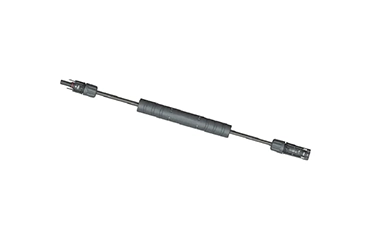
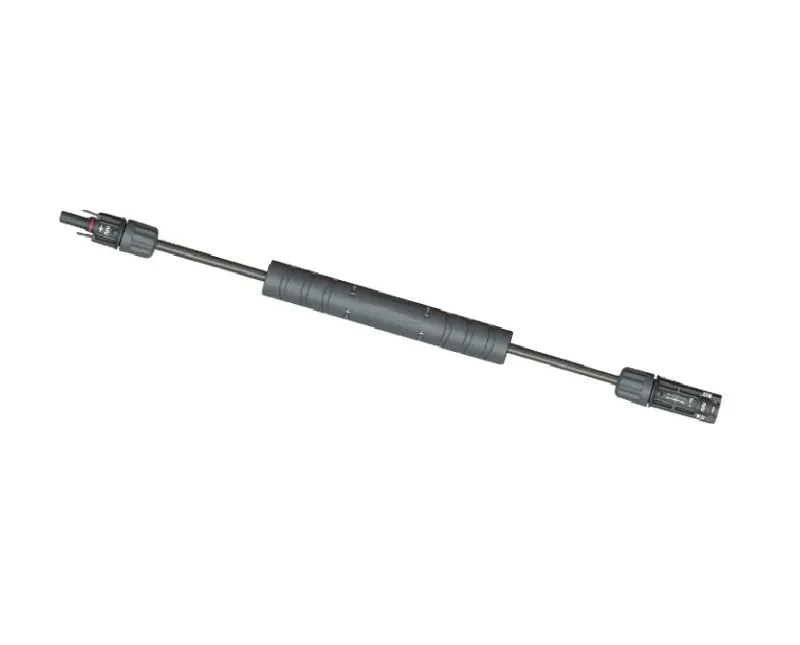
Between the modules and whatever comes next — the rest of the harness run, the combiner, the inverter. The unit is a length of cable with a sealed fuse housing in the middle: 460±20mm overall, with a 10×85mm cartridge inside a housing about 23mm across. It travels where the cable travels, not on a DIN rail.
How Does It Stay Waterproof?
The housing uses weather-resistant material and seals the fuse in line, so the rating is IP68. On a roof that mostly means years of rain, spray from a cleaning crew, and condensation cycling inside a junction — but the number is worth having, because sealing at the fuse removes the need for an enclosure around it.
What Happens at 40 Below?
The stated range is -40℃ to +85℃, and a derating curve sits behind it. The fuse carries roughly full rating around 0-20℃, drops to about 92% at 40℃, 88% at 60℃, and 80% at 100℃. Size the current step against the temperature the housing actually sees in August, not against the headline figure on a datasheet.
One Part That Does Two Jobs
Why In-Line Sealing Saves a Box
A fuse needs two things from its housing: electrical contact that doesn't add resistance, and a seal that keeps water out. This unit handles both inside the cable run — lower contact resistance and higher current transfer capability are the stated electrical goals, and the weather-resistant housing is the sealing one. That's what makes it useful to a system designer: a single line item replaces a fuse, a holder, an enclosure, and the labour to assemble all three at height.
The Numbers on the Housing, Read Simply
Voltage, Current, and Breaking Capacity
DC 1500V rated voltage, 32A maximum current, and a breaking capacity of 30kA at 1500V — that last figure decides whether the fuse clears a fault without coming apart. The time constant is 1-3ms, which is how fast the element responds inside a DC arc that doesn't self-extinguish the way an AC arc does.
Fire, Impulse, and Class
UL94-V0 on the housing, 16kV rated impulse voltage, and Class II on both pollution degree and protection degree. These are the entries an inspector checks when the array sits on a commercial roof and the paperwork has to match what's installed.
Matching the Fuse to Your Cable Gauge
Where the Ladder Breaks
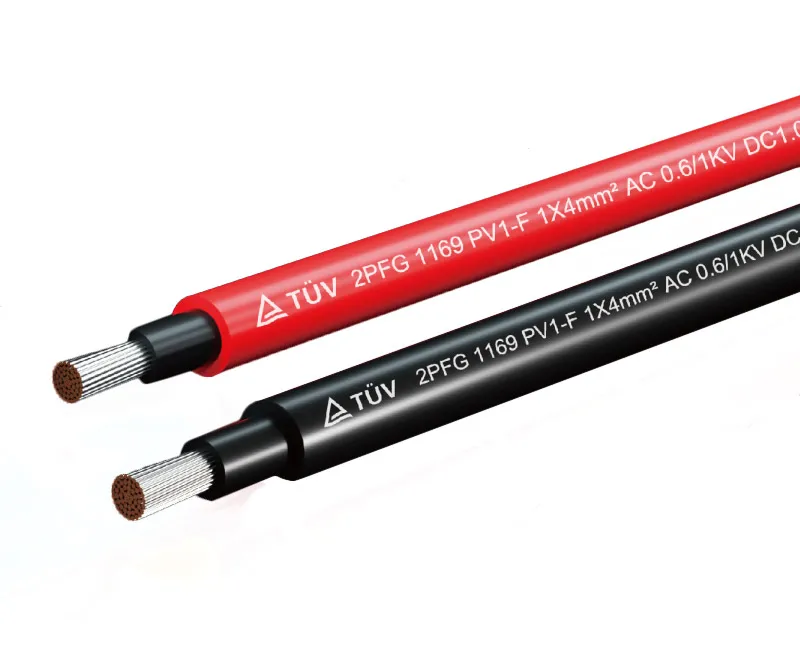
Cable size steps with current, and the order data is consistent about it: 2, 4, 5, 6, 8, and 10A units take 12AWG/2.5mm², 15, 20, and 25A take 4mm², and 30 and 32A take 10AWG/6mm². Those breaks are where a smaller gauge would start to heat under a fault, so pick the cable first and the current step second — not the other way around.
Eleven Current Steps, Three Cable Sizes
The Order Table at a Glance
Eleven types, all at DC 1500V, from 2A to 32A, each mapped to a specific cable spec instead of leaving the choice open. The connector is a SA4 Max by default and can be customized, which matters if your string already runs a different connector family.
| Type | Fuse current | Cable spec | Connector |
|---|---|---|---|
| SA6-B-Mini-1500-02 | 2A | DC 1500V, 12AWG/2.5mm² | SA4 Max or customized |
| SA6-B-Mini-1500-04 | 4A | DC 1500V, 12AWG/2.5mm² | SA4 Max or customized |
| SA6-B-Mini-1500-05 | 5A | DC 1500V, 12AWG/2.5mm² | SA4 Max or customized |
| SA6-B-Mini-1500-06 | 6A | DC 1500V, 12AWG/2.5mm² | SA4 Max or customized |
| SA6-B-Mini-1500-08 | 8A | DC 1500V, 12AWG/2.5mm² | SA4 Max or customized |
| SA6-B-Mini-1500-10 | 10A | DC 1500V, 12AWG/2.5mm² | SA4 Max or customized |
| SA6-B-Mini-1500-15 | 15A | DC 1500V, 12AWG/4mm² | SA4 Max or customized |
| SA6-B-Mini-1500-20 | 20A | DC 1500V, 12AWG/4mm² | SA4 Max or customized |
| SA6-B-Mini-1500-25 | 25A | DC 1500V, 12AWG/4mm² | SA4 Max or customized |
| SA6-B-Mini-1500-30 | 30A | DC 1500V, 10AWG/6mm² | SA4 Max or customized |
| SA6-B-Mini-1500-32 | 32A | DC 1500V, 10AWG/6mm² | SA4 Max or customized |
Reading the Derating Curve in Summer
The curve runs from about 117% at -60℃ down to 80% at 100℃. A housing in full sun on a dark roof can sit well above ambient air, so a 32A unit asked to carry a full 32A at 70℃ is already past its comfortable point. On a hot installation, one step up on the ladder is the cheaper decision.
Length, Diameter, and What Fits in a Hand
Why the Locking Type Matters on a Roof
At 460±20mm overall and roughly 23mm across the housing, the unit handles like a cable rather than a component — one hand carries a bundle, and it needs no mounting bracket to stay put. The locking system is the NEC locking type, which is the detail that decides whether a connector stays mated through thermal cycling and a technician stepping over the run. Something that unmates in year three is a service call; a lock that holds is the difference.
SUNTREE, the Range, and the Order Path
A Custom Connector Changes the SKU
SUNTREE ships the SA6 B Mini Fuse Unit with the SA4 Max connector as standard and offers a customized connector where a string demands it. That's the variable worth settling first: current step and cable gauge come straight off the table, but the connector decides whether the unit plugs into what you already stock.
What Else Ships in the Same Family
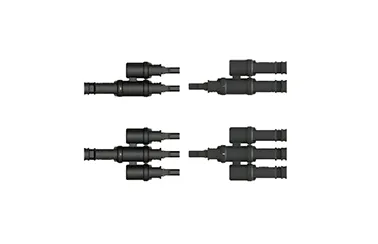
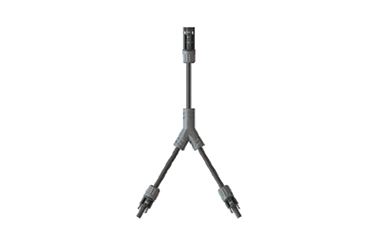
The fuse sits inside a wider Solar Harness range — branch harnesses and integrated confluence products for string-level assembly, plus 1500V DC PV connectors. Ordering the fuse unit and the harness from one supplier leaves one thing settled before either part lands: the connector interface at both ends.
Send the Cable Gauge and the Current Step
What to Put in the Enquiry
Give us the cable gauge you run, the current step you need, and the connector family at each end. Those three lines compress eleven stock types into one SKU, and they're quicker to answer than a catalog browse.
Send them through our request a quotation form and we'll come back with a Solar Harness fuse unit matched to your gauge, your current step, and the connector on your string.