 English
 Deutsch
 Pусский
 Español
 Français
 Português
What Makes a Solar Cable Fit for 25 Years of Outdoor Exposure?


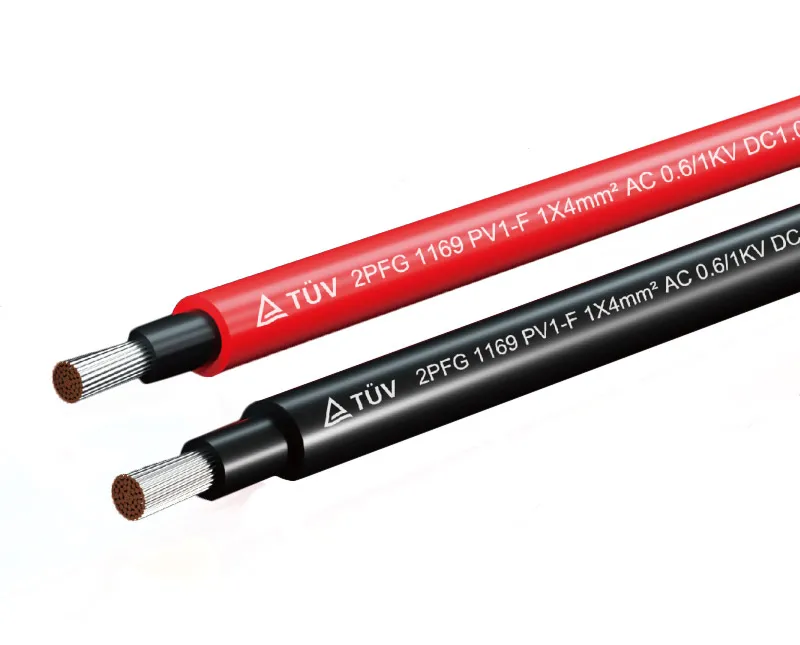
You're designing a solar PV system—a rooftop array, a ground-mounted farm, or a utility-scale plant. The DC cabling connects modules, combiners, and inverters, carrying current through heat, cold, UV radiation, and moisture for decades. A solar wire / cable isn't just any electrical wire—it's engineered specifically for the harsh conditions of photovoltaic installations, with a design life that matches the 25-year lifespan of the solar panels themselves. German Standard TUV photovoltaic cables, for example, are built to withstand UV exposure, ozone, hydrolysis, and temperature extremes while remaining halogen-free and low-smoke for safety. This guide covers what makes a solar cable different, the key specifications you need to check, and how to select the right cable for your PV project.
Built for the Outdoors – Weather Resistance That Lasts
Outdoor solar installations face relentless environmental stress: UV radiation degrades insulation; ozone attacks polymers; moisture causes hydrolysis; temperature swings cause expansion and contraction. A standard indoor cable would fail within months. A photovoltaic cable is engineered to resist all of these.
UV, Ozone, and Hydrolysis Resistance
The cable is designed to be resistant to UV, ozone, and hydrolysis. UV resistance ensures the insulation doesn't crack or become brittle after years of sunlight exposure. Ozone resistance protects against degradation from atmospheric ozone, which is particularly aggressive in industrial and coastal areas. Hydrolysis resistance prevents moisture from penetrating the insulation, which can lead to electrical failure.
Wide Temperature Range
The cable operates in ambient temperatures from -40°C to +90°C, with a conductor maximum temperature of 120°C. This range covers everything from arctic cold to desert heat—and accounts for the heat generated by current flow inside the cable.
Thermal Stability for Long-Term Performance
Thermal stability ensures the cable maintains its electrical and mechanical properties across temperature cycles. The insulation and sheath materials are rated to 125°C under the irradiation crosslinking process.
Electrical Ratings – Matching the Cable to Your System
Solar systems are trending toward higher voltages to reduce cable losses and lower system costs. The cable must be rated for the maximum system voltage and current.
Voltage Ratings
The German Standard TUV cable is rated for U0/U 1.0/1.0KV (AC) and 1500V (DC). This makes it suitable for modern high-voltage solar arrays. The cable is designed for use on the DC side of PV systems with a maximum allowable voltage of 1.8 kV DC (conductor-conductor, ungrounded systems). It is suitable for Safety Class II applications.
Test Voltage and Safety Margins
The cable withstands test voltages of AC 6.5KV for 5 minutes or DC 15KV for 5 minutes without breakdown. This substantial safety margin ensures the cable can handle voltage surges and transients common in PV systems.
Conductor Construction
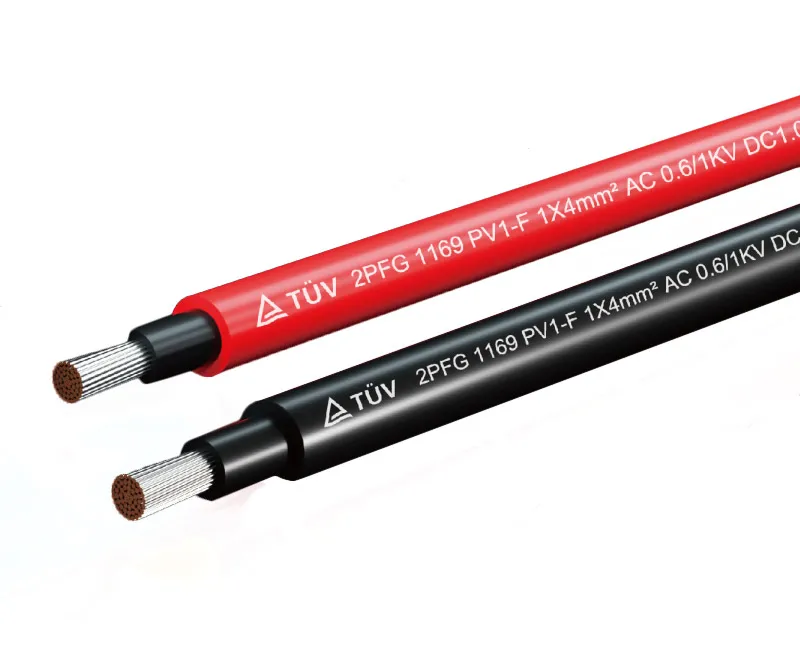
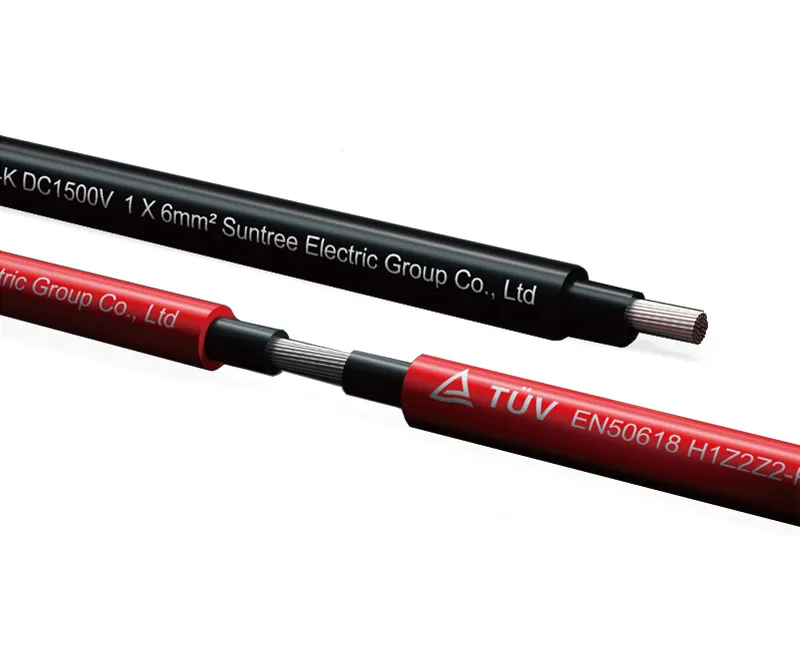
The conductor is Type 5 tinned copper flexible conductor, compliant with EN 50618. Tinned copper resists corrosion better than bare copper—important for connections exposed to moisture. The flexible construction makes installation easier, particularly in tight spaces and around bends.
Safety and Environmental Compliance – Halogen-Free and Low-Smoke
Fire safety is a critical consideration in any electrical installation. When a cable burns, the materials it releases can be as dangerous as the fire itself.
Halogen-Free Materials
The cable uses halogen-free material. Halogenated cables release toxic, corrosive gases when burned—hydrogen chloride, hydrogen fluoride, and other compounds that damage equipment and harm people. Halogen-free cables produce minimal smoke and no toxic gases, making them safer in the event of a fire.
Low-Smoke Properties
The cable is low-smoke, reducing visibility obstruction during a fire and allowing for safer evacuation. This is particularly important in indoor installations, such as rooftop arrays above occupied spaces.
Fire Resistance Certification
The cable meets EN 60332-1-2 fire resistance standards. This ensures that the cable does not propagate fire—if a flame source is removed, the cable will not continue to burn.
Construction – What's Inside a Photovoltaic Cable
Understanding the cable's construction helps you evaluate quality and suitability for your application.
Conductor – Tinned Copper Flexible Conductor
The conductor is Type 5 tinned copper flexible conductor as specified in EN 50618. The tinning provides corrosion resistance, and the flexible stranding makes the cable easier to handle and install.
Insulation – Irradiation Crosslinked Polyolefin
The insulation is 125°C irradiation crosslinking low smoke halogen free flame retardant polyolefin. The irradiation crosslinking process creates chemical bonds between polymer chains, improving thermal stability, mechanical strength, and chemical resistance. This is what allows the cable to operate at 120°C conductor temperature.
Sheath – Same Material, Dual Protection
The sheath is also 125°C irradiation crosslinking low smoke halogen free flame retardant polyolefin. Double-layer protection—insulation plus sheath—provides redundancy and additional mechanical protection.
Standards and Certifications – What to Look For
Third-party certification provides assurance that the cable meets international standards for quality and safety.
EN 50618 and IEC 60930
The cable complies with EN 50618:2014 and IEC 60930:2017. These are the key standards for photovoltaic cables, covering construction, performance, and testing requirements.
TUV and RoHS Certification
The cable carries TUV certification and is RoHS compliant. TUV certification provides independent verification of quality and safety. RoHS compliance ensures the cable is free from hazardous substances, making it suitable for environmentally conscious projects.
UL4703 Compliance for North America
The cable also meets UL4703 standards, with rated AC voltages of 600V, 1000V, and 2000V. This dual certification (EN and UL) makes the cable suitable for both European and North American markets.
Key Specifications
| Specification | Value | Why It Matters |
|---|---|---|
| Rated voltage | U0/U 1.0/1.0KV AC, 1500V DC | Suits modern high-voltage PV systems |
| Test voltage | AC 6.5KV/5min or DC 15KV/5min | Safety margin for voltage surges |
| Ambient temperature | -40°C to +90°C | Performs in extreme climates |
| Conductor max temperature | 120°C | Handles current-generated heat |
| Service life | 25 years | Matches panel lifespan |
| Bending radius | 4D | Easy installation in tight spaces |
| Conductor | Type 5 tinned copper | Corrosion-resistant, flexible |
| Insulation/Sheath | 125°C irradiation crosslinked polyolefin | Thermal stability, halogen-free, low-smoke |
| Fire resistance | EN 60332-1-2 | Does not propagate fire |
| Certifications | TUV, RoHS, EN 50618, UL4703 | International compliance |
What Solar Installers Ask About Photovoltaic Cables
What is the expected service life of a photovoltaic cable?
The cable is designed for a service life of more than 25 years, matching the lifespan of solar panels.
What is the maximum voltage rating?
The cable is rated for U0/U 1.0/1.0KV AC and 1500V DC, with a maximum allowable DC voltage of 1.8kV (conductor-conductor, ungrounded systems).
What temperature range can it withstand?
The cable operates in ambient temperatures from -40°C to +90°C, with a conductor maximum temperature of 120°C.
Is the cable halogen-free?
Yes. The cable is halogen-free and low-smoke. The insulation and sheath use halogen-free flame retardant polyolefin.
What certifications does it carry?
The cable is TUV certified, RoHS compliant, and meets EN 50618 and IEC 60930 standards. It also meets UL4703 standards for North American applications.
Looking for a PV Cable That Performs in Extreme Conditions? Let's Find the Right Fit
Selecting a solar cable comes down to three factors: voltage rating (match your system), temperature range (match your climate), and certifications (match your regulatory requirements). Contact Suntree for a customized quote → —their team can help you select the right German Standard TUV photovoltaic cable configuration for your specific solar installation.
Suntree brings nearly 20 years of industry experience in solar cables, with a technical R&D team of 50+ people and a matching database of 500+ projects covering all typical extreme environments worldwide. The German Standard TUV Photovoltaic Cable features U0/U 1.0/1.0KV AC and 1500V DC rating, Type 5 tinned copper flexible conductor, 125°C irradiation crosslinked halogen-free low-smoke polyolefin insulation and sheath, -40°C to +90°C ambient temperature range, 25-year service life, and TUV, RoHS, EN 50618, and UL4703 certifications. Suntree provides full-process quality control with rigorous supply chain screening and material standard control. Connect with Suntree to discuss your voltage requirements, temperature conditions, and certification needs.
-0943.webp)