 English
 Deutsch
 Pусский
 Español
 Français
 Português
When Does a Standard MC4 Solar Connector Start to Struggle?


A utility‑scale solar farm in the Middle East kept tripping string fuses. The SCADA logs showed no fault, but thermal cameras revealed connectors running 30°C above ambient. The connectors were industry‑standard MC4s. The problem was not the connector design. The problem was that the 40‑50A current from high‑wattage bifacial modules exceeded the continuous rating of the standard contact, and the resistance heated the connector beyond the safe operating temperature. The solution was not a different panel or a different cable. The solution was a solar connector rated for the actual current.
A solar connector is the interface between PV modules, strings, and inverters. The industry default, the MC4, is designed for a specific current and voltage envelope. When system requirements exceed that envelope—higher current from larger modules, higher voltage from 1500V strings, higher ambient temperatures from rooftop installations—a connector that meets a higher specification is required. The PMCN Plus series from Suntree is a 1500V DC connector rated for 120A continuous, with IP68 waterproofing and a contact resistance of ≤0.35mΩ. This article explains when a standard MC4 is sufficient, when you need a high‑current connector, and how to tell which one your project requires.
Defining the Two Connector Classes
MC4‑compatible connectors (standard type) are designed for residential and small commercial PV systems. They typically have stamped pin contacts rated at 40‑50A and are certified to 1000V DC or 1500V DC depending on the model. Their contact resistance is typically 0.5‑1.0mΩ. They are suitable for most rooftop installations where string currents stay below 40A.
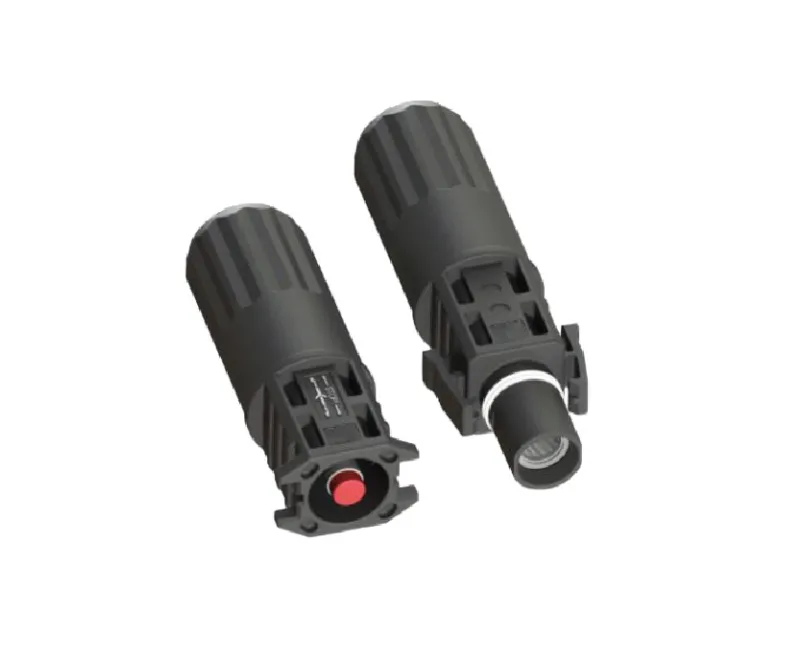
High‑current solar connectors (PMCN Plus class) are built for utility‑scale and high‑power commercial arrays. The PMCN Plus uses a lathed pin contact rated at 120A, a full 1500V DC rating (IEC and UL), and a contact resistance of ≤0.35mΩ. The housing is engineered for extreme conditions: IP68 waterproofing, a -40℃ to 125℃ operating range, and UV‑resistant materials that withstand decades of sunlight exposure.
The lathed pin construction is the key difference. A stamped pin is formed from sheet metal; it is less expensive but has higher contact resistance and lower current capacity. A lathed pin is machined from solid copper stock, then silver‑ or tin‑plated. The result is a larger contact area, lower resistance, and the ability to carry higher current without overheating.
Construction and Performance Differences
| Feature | Standard MC4‑Type Connector | PMCN Plus High‑Current Connector |
|---|---|---|
| Rated voltage | 1000V or 1500V DC | 1500V DC (IEC & UL) |
| Rated current (stamped/lathed) | 40‑50A | 120A (lathed) |
| Contact resistance | 0.5‑1.0 mΩ | ≤0.35 mΩ |
| IP rating | IP65‑IP67 | IP68 |
| Operating temperature | -40℃ to 85℃ | -40℃ to 125℃ |
| Contact type | Stamped (or stamped with spring) | Lathed (machined) |
| Cable range | 4‑16 mm² | 16‑25 mm² |
| Best application | Residential, small commercial | Utility‑scale, high‑current strings, extreme environments |
The PMCN Plus uses a high‑purity copper conductor with a low contact resistance of ≤0.35mΩ, which is a critical factor in reducing power loss and preventing heat buildup at the connection point. The IP68 rating means the connector is dust‑tight and can be submerged continuously—essential for ground‑mount arrays in flood‑prone areas.
Where Each Type Belongs in a PV System
The choice between a standard MC4 and a high‑current solar connector depends on the system design.
Standard MC4‑type – Residential rooftop arrays with string currents under 40A. Typical module size: 400‑500W, with short‑circuit currents around 13‑15A per module. A string of 10 modules still stays well under 40A. These systems also operate at lower string voltages (600‑1000V DC), so the thermal stress on connectors is lower.
PMCN Plus high‑current – Utility‑scale arrays with 600W+ bifacial modules that can produce 18‑20A per module. A string of 6 modules reaches 110‑120A, requiring a connector rated for that current. Also used in:
-
1500V DC strings – Higher voltage reduces cable losses but increases arcing risk. The PMCN Plus has the full 1500V DC certification (both IEC and UL), with contact surfaces designed to extinguish DC arcs faster.
-
High‑temperature environments – Desert installations where module temperatures exceed 85°C. The PMCN Plus has a 125°C rating, providing margin above the operating temperature.
-
Offshore and coastal systems – Salt spray corrodes standard connectors. The PMCN Plus IP68 rating and UV‑resistant housing withstand marine environments.
A commercial rooftop with 500W modules arranged in short strings may still be fine with standard connectors. A 10MW ground‑mount with 700W bifacial modules requires high‑current connectors on every string.
Why Contact Resistance Is the Number That Matters
A connector‘s contact resistance determines how much heat it generates under load. Power lost as heat is P = I²R. At 120A, a connector with 1.0mΩ contact resistance dissipates 14.4W. A connector with 0.35mΩ dissipates 5.0W — less than half the heat. Over 5,000 connectors in a 50MW plant, that difference in heat dissipation can significantly raise the combiner box temperature if standard connectors are used where high‑current ones are required.
The heat does not stay in the connector. It conducts into the cable insulation, raising the temperature of the entire cable run. Repeated thermal cycling accelerates oxidation of the contact surfaces, increasing resistance further in a feedback loop that ends in connector failure. A connector that starts at 1.0mΩ may rise to 2‑3mΩ after years of thermal cycling, while a connector that starts at 0.35mΩ stays below 0.5mΩ for the life of the system.
For a plant operator calculating the levelized cost of energy, the higher efficiency from lower contact resistance directly increases energy harvest over 25 years. The difference is small per connector but significant across thousands of connections.
Environmental Requirements and IP Ratings
A solar connector mounted on a rooftop in Arizona sees extreme UV exposure and high temperatures. A connector mounted in a ground‑mount in Florida sees high humidity and heavy rain. A connector in a coastal installation sees salt spray. The IP rating and material selection determine whether the connector survives.
IP68 means the connector is dust‑tight and can be submerged continuously. The PMCN Plus IP68 rating ensures that a connector in a flooded cable trench or a monsoon rain remains sealed. Standard MC4 connectors are typically IP65 or IP67, which is adequate for most installations but not for areas with standing water.
The ‑40℃ to 125℃ operating temperature range covers extreme cold and high heat. A rooftop module in summer can reach 85‑90°C, and the connector attached to it will reach similar temperatures. A standard connector rated to 85°C has no safety margin; a PMCN Plus rated to 125°C provides a 40°C buffer.
UV resistance is critical for connectors exposed to direct sunlight. The housing of the PMCN Plus is made from high‑performance engineering plastics that resist UV degradation, so the plastic does not become brittle and crack after years of exposure.
When Mismatching Connectors Becomes a Fire Hazard
The most common field failure in PV systems is not the connector itself. It is mismatched connectors — using a male from one manufacturer and a female from another. The parts may click together, but the contact geometry, spring force, and sealing dimensions differ. Cross‑mating invalidates the safety certification (IEC 62852, UL 6703) and can lead to increased contact resistance, overheating, and eventual fire.
IEC 62852 applies to connectors for use in DC circuits of photovoltaic systems with rated voltages up to 1500V DC and rated currents up to 125A per contact. It specifies safety requirements and tests, including temperature rise, dielectric strength, and ingress protection. UL 6703 is the North American standard, covering similar requirements with additional tests for outdoor exposure and mechanical durability.
A PMCN Plus connector is designed to mate reliably only with its own counterpart from the same Suntree product family. Plugging it into a connector from any other manufacturer negates the certification and voids equipment warranties. For a utility‑scale project, standardising on one connector family across the entire plant eliminates the risk of cross‑mating.
Three Signs You Need a High‑Current Solar Connector
Sign one: Your modules exceed 550W. High‑wattage modules produce higher string currents. A string of 700W bifacial modules can push 120A at peak production. A standard 40A connector will overheat within weeks.
Sign two: Your site is in a desert or coastal area. Standard connectors degrade faster under extreme UV and salt exposure. The PMCN Plus uses UV‑stabilised engineering plastics and IP68 sealing that lasts decades.
Sign three: Your thermal imaging shows hotspots at connectors. If regular inspections reveal connectors running 15‑20°C above ambient, the existing connectors are undersized or damaged. Upgrading to high‑current connectors reduces the temperature rise and improves system reliability.
For a system where none of these signs apply — low‑wattage modules, moderate climate, and no existing hotspots — standard MC4‑type connectors may be the cost‑effective choice. The extra capacity of a PMCN Plus is not needed where the load never approaches the standard connector‘s rating.
Frequently Asked Questions About Solar Connector Selection
Can I use a PMCN Plus connector with a standard MC4 plug?
No. The physical interface of the PMCN Plus is compatible with standard MC4 dimensions, but the internal contact geometry and sealing are different. For full certification and warranty protection, the connector should only be mated with its corresponding female from the same Suntree product family.
What cable sizes does the PMCN Plus accept?
The PMCN Plus is designed for 16‑25 mm² cables, matching the larger conductor sizes needed for high‑current strings. A 16 mm² copper cable is rated for approximately 90‑100A; 25 mm² is rated for 120‑140A. The connector‘s 120A rating is matched to the ampacity of the recommended cable.
What happens if I use a standard connector on a 120A string?
The connector will overheat. The contact resistance will rise as the metal expands and contracts. Eventually, the housing will discolor, the seals will fail, and moisture will enter. In a worst‑case scenario, the connector will melt or catch fire. A PV plant in Romania experienced this firsthand: connectors on a 350kW system reached temperatures well over 80°C, with white spots visible on the housings as a warning sign.
Do I need a special tool for PMCN Plus connectors?
The PMCN Plus uses the same standard MC4 crimping tools as most PV connectors. The crimp die is selected based on the cable size (16‑25 mm²). The contact is inserted into the housing until it clicks; removal requires a standard MC4 extraction tool.
How long do PMCN Plus connectors last?
Suntree‘s solar connectors have a service life of more than 25 years under normal use and maintenance, matching the design life of PV modules. Regular inspection should check for damage, deformation, loose connections, or heat generation.
How the PMCN Plus Fits into Suntree‘s Solar Connector Portfolio
Suntree has delivered over 500 large‑scale projects worldwide, providing cable and connector solutions for renewable energy, energy storage, and EV charging infrastructure. The solar connector product line includes:
-
PMCN Series – 1500V DC, 40A (stamped) / 70A (lathed), for general PV applications
-
PMCN Plus Series – 1500V DC, 120A, for high‑current utility‑scale arrays
-
PS Series – 160‑630A, for high‑current shore power and industrial applications
-
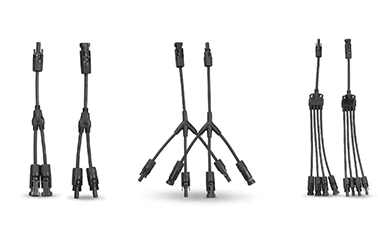
A4 nB1 and PMBC Series – Branch connectors for string combining
The PMCN Plus is certified to both IEC 62852 and UL 6703, carries an IP68 rating, and meets a contact resistance of ≤0.35mΩ. The housing is UV‑resistant and halogen‑free, with a digital traceability system that provides real‑time access to data across the entire supply chain.
A solar connector that matches the actual current and environmental demands of the installation prevents failures. For a utility‑scale project with 120A strings in a desert climate, the PMCN Plus delivers the current rating, IP68 protection, and low contact resistance that keep the array producing power without connector‑related downtime.
[Request a quote from Suntree]
Contact Suntree with your system voltage (1500V DC), maximum string current, and environmental conditions to receive a PMCN Plus connector sample and a full certification package.
-0943.webp)