 English
 Deutsch
 Pусский
 Español
 Français
 Português
Are Your Solar Harness Specifications Up to Standard?


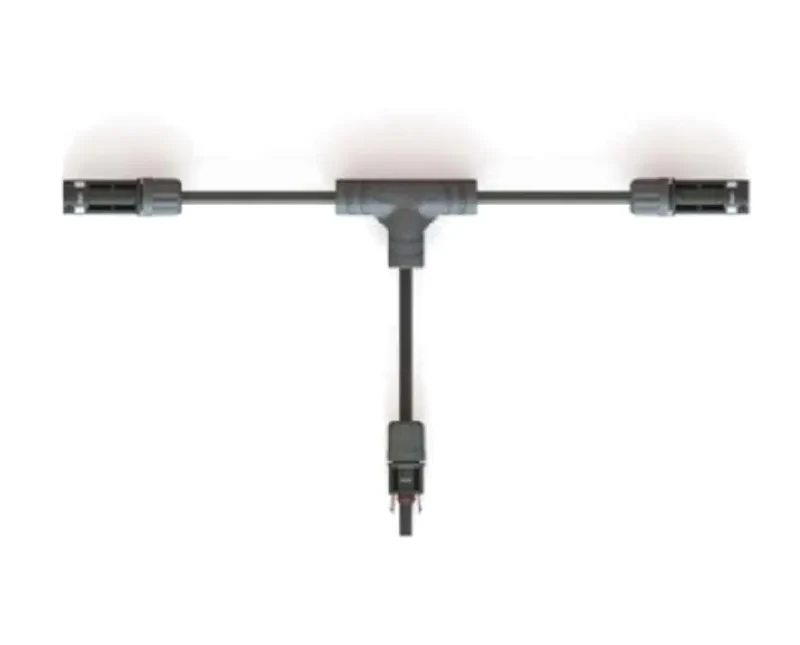
You're selecting components for a solar installation, and the spec sheet lists certifications you've never heard of, voltage ratings that seem arbitrary, and an IP code that might not mean what you think it does. A solar harness is a critical link in your PV system—but only if it actually meets the standards it claims to. The SH-T Branch was developed with clear compliance in mind: rated for the emerging 1500V DC standard, tested to IP68 waterproofing, and qualified by independent labs. This article walks through what those specifications actually mean—and how to tell if a harness is built to the standards your project requires.
Two Questions About Standards and Compliance
Straight Answers on Voltage and Certification
Q: Why does 1500V DC matter, and is it really necessary?
A: Higher voltage systems reduce current for the same power output, allowing longer string lengths and fewer combiner boxes. The SH-T Branch is rated for 1500V DC, matching the standard increasingly adopted in utility-scale and commercial PV installations worldwide.
Q: What certifications should I look for in a solar harness?
A: Look for independent lab testing to international standards. The SH-T Branch has been qualified in TUV and ETL labs and has passed both IEC1500V and UL1500V certifications. TUV and ETL are recognized independent testing organizations, not self-declared claims.
IEC and UL—Two Standards, One Purpose
The SH-T Branch carries both IEC1500V and UL1500V certifications. While they serve similar purposes—verifying the component's safety and performance—they represent different regulatory frameworks for different markets.
What IEC1500V Means
IEC standards are used globally, particularly in Europe, Asia, and other regions that follow international electrical codes. Compliance with IEC1500V indicates the harness meets stringent requirements for voltage rating, temperature performance, and mechanical durability.
What UL1500V Means
UL (Underwriters Laboratories) standards are required in North American markets. UL1500V certification ensures the harness meets the safety and performance requirements for use in the United States and Canadian solar markets. Both certifications together indicate the component is suitable for global deployment.
Why TUV and ETL Testing Adds Value
TUV and ETL are independent testing organizations, not manufacturers or distributors. When a product is tested by TUV or ETL, the claims on the spec sheet have been verified by an external party. This reduces the risk associated with relying on a manufacturer's own test data.
The 1500V DC Standard—Why It's the New Baseline
For years, 1000V was the standard for solar installations. The shift to 1500V allows longer strings, reducing the number of combiner boxes and lowering balance-of-system costs.
What the Higher Voltage Enables
At 1500V DC, strings can be longer before exceeding voltage limits, reducing the number of parallel strings and simplifying the combiner box design. For utility-scale projects, this can represent significant cost savings in both equipment and labor.
Does Your Harness Need It?
If your project uses modern 1500V inverters and modules, the harness must be rated for 1500V DC. Even if you're running 1000V today, selecting a 1500V-rated harness provides future-proofing for system upgrades.
IP68—The Waterproof Rating That Actually Means Something
"Waterproof" is a vague term. IP68 is a specific standard. The SH-T Branch carries an IP68 rating, meaning it can withstand continuous immersion in water beyond 1 meter.
What IP68 Actually Verifies
The first digit (6) indicates complete dust protection. The second digit (8) indicates protection against continuous immersion in water. For a solar harness, this means rain, snowmelt, and even temporary flooding won't compromise the connection.
IP68 vs. IP67—What's the Difference
IP67 allows immersion up to 1 meter for 30 minutes. IP68 goes beyond that, allowing deeper and longer submersion. For outdoor solar applications where panels may be exposed to standing water, IP68 provides an extra margin of safety.
The Temperature Range and Material Selection
A solar harness doesn't just sit in a climate-controlled environment. It faces extreme heat, freezing temperatures, and UV exposure. The SH-T Branch operates from -40°C to 90°C and is built with UV-resistant materials.
Why UV Resistance Matters Over Decades
UV radiation degrades many plastics, turning them brittle and compromising sealing. The SH-T Branch's UV-resistant materials maintain their integrity over the 25+ year lifespan of a solar array—you're not replacing harnesses at year 10.
What -40°C to 90°C Covers
This range encompasses almost every terrestrial climate—from cold-weather solar farms in northern latitudes to desert installations in the Middle East and North Africa. The harness's performance doesn't degrade at temperature extremes.
| Specification | SH-T Branch Value | What It Verifies |
|---|---|---|
| Rated Voltage | DC 1500V | Compatibility with modern high-voltage PV systems |
| Rated Current | 50A | Ample capacity for most string configurations |
| Waterproof Rating | IP68 | Protection against immersion and flooding |
| UV Resistance | Yes | Prevents material degradation from sunlight |
| Temperature Range | -40°C to 90°C | Performs across extreme climates |
| Certifications | IEC1500V, UL1500V | Recognized international and North American standards |
| Test Labs | TUV, ETL | Independent verification |
Beyond Certification—The SUNTREE Track Record
Certifications are important, but they're not the whole story. SUNTREE brings nearly 20 years of experience in the solar cable industry, with a technical R&D team of over 50 people and a matching database of more than 500 projects covering all typical extreme environments worldwide.
What 500 Projects Tell You
A company with experience across diverse environments has encountered and solved real-world problems. The SH-T Branch has been specified and installed in projects worldwide, with the design refined based on field experience.
The Technical R&D Commitment
With a team of over 50 R&D engineers, SUNTREE has the resources to design, test, and iterate on its products. The SH-T Branch didn't arrive at its current spec sheet by accident—it's the result of years of development and testing.
Straight Answers on Solar Harness Standards
Q: What is the maximum voltage for the SH-T Branch?
A: The SH-T Branch is rated for DC 1500V maximum system voltage.
Q: What certifications does it carry?
A: It has passed both IEC1500V and UL1500V certifications, with qualification testing performed in TUV and ETL labs.
Q: Is it really waterproof?
A: Yes. The SH-T Branch has an IP68 waterproof rating, meaning it can withstand continuous immersion in water.
Q: What temperature range does it support?
A: It operates from -40°C to 90°C, covering arctic cold, desert heat, and everything in between.
Q: What cable sizes does it accept?
A: It accepts cables from 4mm² to 16mm², providing flexibility for different string configurations.
Q: How does the SH-T Branch compare to the SH-X Branch?
A: Both are part of SUNTREE's SH Series of photovoltaic branch harnesses. They offer similar core specifications—1500V DC, IP68, UV resistance, and TUV/ETL certification—with different configuration options to suit specific installation requirements.
Request a Spec Sheet for Your PV Array
A solar harness is only as good as the standards it meets. The SH-T Branch delivers compliance with 1500V DC, IP68 waterproofing, UV resistance, and independent TUV/ETL certification—so you know it's built to the specifications required for modern PV installations.
Whether you're specifying for a utility-scale project, a commercial rooftop, or a solar carport, the SH-T Branch offers the certified performance and reliability that solar professionals require. SUNTREE's nearly 20 years of experience, 50+ R&D engineers, and 500+ project database provide the support behind every product.
Contact SUNTREE for a spec sheet or consultation → their team can help you verify that the SH-T Branch meets your specific voltage, current, and environmental requirements. Get a solar harness that meets the standards—not just on paper, but in the field.
-0943.webp)