 English
 Deutsch
 Pусский
 Español
 Français
 Português
How to Fix Voltage Drop Issues in Long Solar Cable Runs


Your PV array is performing below expectations. The modules are clean, the inverter is working, but the numbers don’t add up. One of the most common—and most overlooked—culprits is voltage drop in long DC cable runs.
When your solar array is far from the inverter, or when string lengths are pushed to their limits, the resistance of the Solar Wire / Cable becomes a significant factor. Every meter of cable adds resistance. Every resistance creates heat instead of power. The result: your inverter sees lower voltage than the modules produce, and your system output drops.
This guide covers how to recognize when voltage drop is the problem, how to measure it accurately, and six practical fixes—from upsizing cables to reconfiguring strings—so you can restore your system‘s full potential.
Recognizing When Voltage Drop Is the Problem
Voltage drop doesn’t announce itself with an alarm. You have to know what to look for.
The Telltale Symptoms
The most obvious sign is a measured inverter input voltage that‘s significantly lower than the calculated string voltage. If your 600V string is showing 570V at the inverter under full load, you’re losing voltage somewhere. A drop of more than 3% warrants attention; more than 5% requires immediate action.
The Temperature Factor
Temperature makes the problem worse. As the cable heats up—from ambient temperature or from the current itself—the conductor resistance increases. A cable that‘s borderline on a cool morning may be losing significant power on a hot afternoon.
Performance vs. Expectation
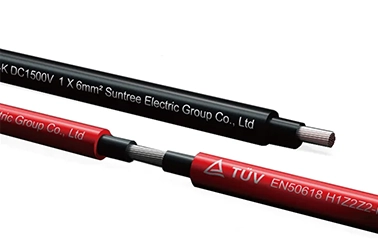
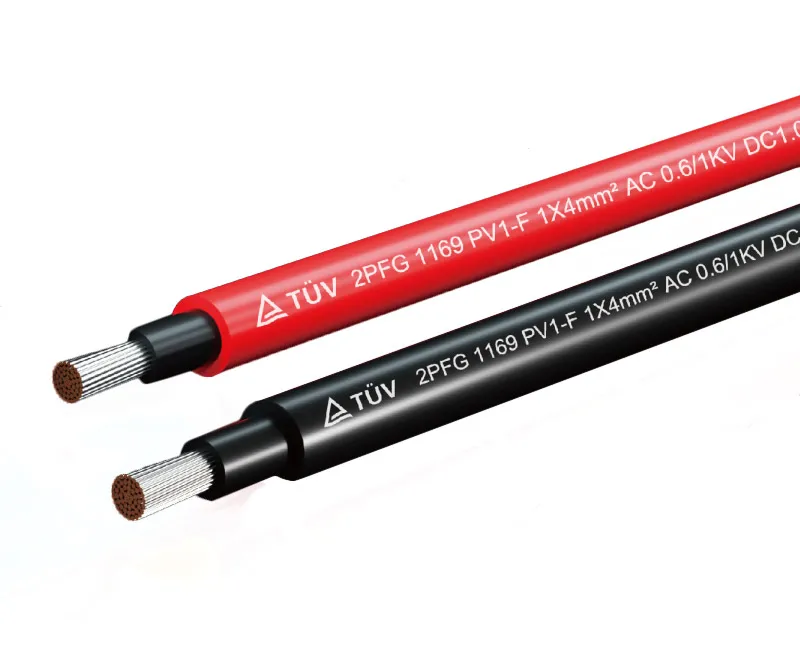
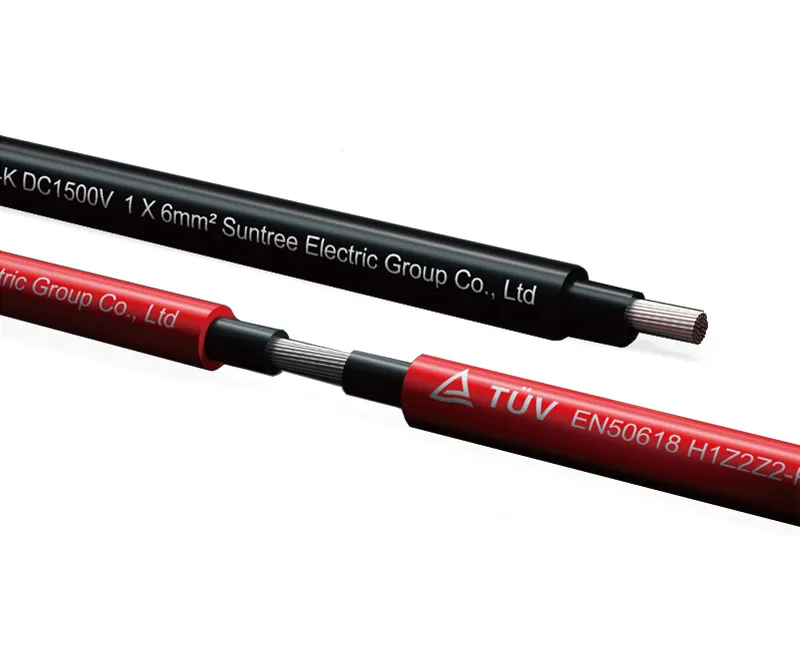
If your system consistently underperforms its modeled output, especially on sunny days when the array should be at peak production, voltage drop is one of the first things to check. Suntree’s solar cables are designed with high-purity copper cores for excellent conductivity, but even the best cable has resistance.
Diagnosing the Exact Drop Amount
Before you fix anything, you need to know exactly how much voltage you‘re losing—and where.
The Two-End Measurement Method
Measure the voltage at the array output (at the combiner box or string junction) and simultaneously at the inverter input. The difference is your total voltage drop. If you can’t access both ends simultaneously, use the “extension method”: run a temporary test wire alongside the cable and measure at both ends with a long meter lead.
Calculate Actual Line Resistance
Use Ohm‘s Law: R = Vdrop / I. Divide the measured voltage drop by the string current to get the actual resistance of the cable run. Compare this to the theoretical resistance for your cable size and length. If the measured resistance is significantly higher, you may have connection issues—not just undersized cable.
Check for Connection Resistance
A loose terminal, a corroded connector, or an improperly crimped lug can add resistance that doesn’t show up in cable calculations. Inspect every connection point along the run. Suntree‘s solar cables feature lower contact resistance and higher current transfer capability, but connection quality is still installation-dependent.
Upsize the Cable
The most straightforward fix is also the most effective: replace the existing cable with a larger gauge.
The Impact of Upsizing
Going from 10 AWG to 8 AWG reduces resistance by roughly 40%. Going to 6 AWG cuts it by another 30%. The improvement is immediate and permanent. For new installations, upsizing from the start is almost always the right decision—the extra cable cost is small compared to the lifetime lost production.
When It Makes Sense
Upsizing is the best option for new designs or when the existing cable is in conduit that can accommodate a larger cable. It‘s also the right choice when the voltage drop is severe (over 5%) and other fixes aren’t practical.
The Cost Consideration
The upfront cost of larger cable is higher, but the lifetime energy gain often pays for the difference within the first few years. Suntree‘s solar cables are UL4703 certified and available in multiple gauges to match different system requirements.
Parallel an Additional Cable
If replacing the existing cable isn’t practical, paralleling a second cable of the same size is a viable alternative.
How It Works
Running a second cable in parallel with the first effectively halves the resistance. The current splits between the two cables, and the voltage drop is cut roughly in half. The existing cable stays in place; you simply add a second run alongside it.
When to Use This Option
Paralleling works well when there is space in the conduit or when cables can be run on the surface. It‘s also a good option when you’re not sure if upsizing is necessary—you can add the second cable and see the improvement.
Important Considerations
Both cables must be the same length, same gauge, and terminated identically to ensure current sharing. Mismatched parallel cables can create circulating currents and actually increase losses. Suntree‘s solar cables feature high mechanical strength to withstand the stresses of installation and maintenance.
Reconfigure the Array Strings
Sometimes the cable is fine—the system design is the problem.
Split Long Strings
A single long string running hundreds of meters to the inverter creates high resistance. Splitting that string into two shorter strings, each running to a closer combiner box or to a central inverter with multiple MPPT inputs, reduces the length—and the loss—of each run.
Increase System Voltage
If your system is designed for 600V, moving to 1000V or 1500V cuts the current for the same power in half. Lower current means lower I²R losses. This is one of the reasons utility-scale systems have moved to higher voltages.
Compatibility Check
Before reconfiguring, confirm that your inverter and modules support the new voltage configuration. Not all equipment is rated for 1500V operation. Suntree‘s solar cables are rated for 1500V DC, making them suitable for high-voltage system designs.
Improve Connections Along the Path
Sometimes the voltage drop isn’t the cable—it‘s the connections.
The Cumulative Effect
A single poor connection might add only 0.1Ω. But in a long string with multiple connections—combiner box terminals, MC4 connectors, inverter input terminals—that resistance adds up. What looks like cable loss may actually be connection loss.
What to Check
Inspect every terminal and connector. Tighten all screw terminals to the manufacturer’s specified torque. Look for signs of corrosion, discoloration, or overheating on connector pins. Replace any MC4 connectors that show pitting or wear.
Clean and Protect
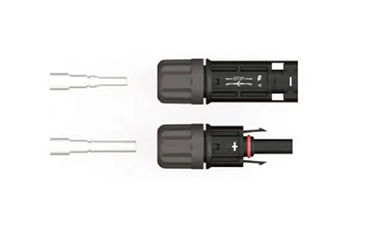
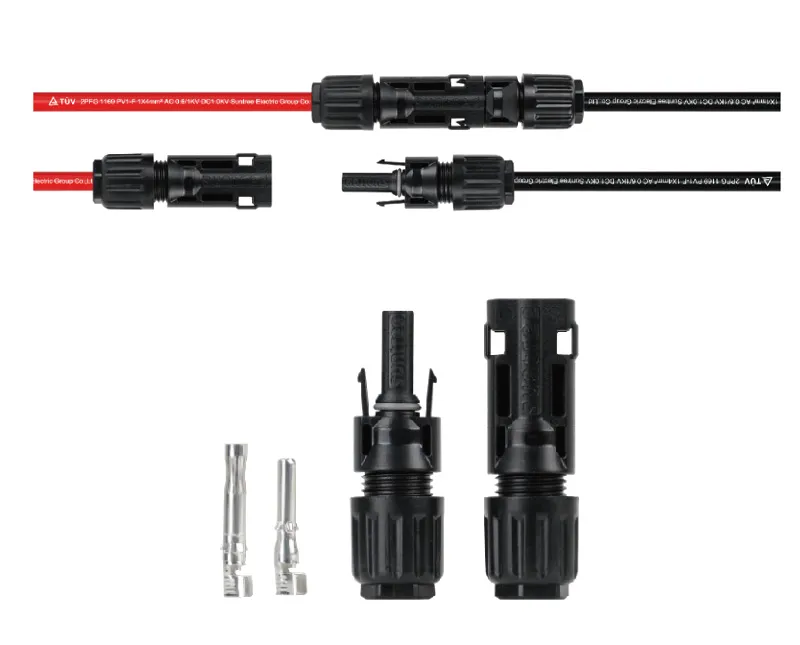
Clean oxidized surfaces with contact cleaner. Apply anti-oxidant compound to aluminum conductors before termination. Suntree‘s solar connectors feature IP68 waterproof rating and UV resistance, but connectors still need proper installation and periodic inspection.
Add a Line Booster (DC-DC Converter)
For extreme distances—over 500 meters—a DC-DC converter can be the most practical solution.
How It Works
A DC-DC boost converter installed at the array end steps up the voltage before the long cable run. Higher voltage means lower current for the same power, which means lower I²R losses on the cable. The inverter receives the correct voltage, and the system operates efficiently.
When to Consider It
This option is for special cases: remote arrays, difficult terrain where running new cable is impractical, or retrofits where the existing cable can‘t be replaced. It’s also useful when upsizing would require major civil work.
The Trade-Off
DC-DC converters add cost, complexity, and a small efficiency loss of their own. They‘re not a first-line solution, but they can be the right answer for difficult installations. Suntree’s solar cables are designed for long-term reliability in extreme conditions, but sometimes the cable isn‘t the only part of the solution.
What Engineers Ask About Long Cable Runs
Is voltage drop more serious for DC than AC?
Yes. DC systems don’t have the reactive power compensation that AC systems do. In AC systems, voltage drop can be partially offset by power factor correction. In DC, every volt lost is power that never reaches the inverter. For long DC runs, voltage drop is a primary design consideration. Suntree‘s cables are designed with lower contact resistance to minimize these losses.
Can I use a thicker cable only for the last section of a run?
No—the voltage drop is cumulative across the entire run. Adding thicker cable only at the end doesn’t reduce the drop from the rest of the cable. The resistance of the entire circuit determines the loss. If you‘re going to upsize, the entire run needs to be upsized, or you need to parallel the entire run.
How much power loss is acceptable for utility-scale projects?
For utility-scale projects, the industry standard is to limit DC voltage drop to 2-3% of the array voltage at maximum power. Some developers target 1.5% for high-value projects where every fraction of a percent of production matters. Suntree’s solar cables are qualified in TUV and ETL labs with solar professional standards, ensuring consistent performance.
Choosing the Right Fix for Your Situation
The best fix depends on your specific installation.
For New Installations
Design with voltage drop in mind from the start. Calculate the expected drop and upsize the cable if needed. The additional cable cost is minimal compared to lost production over 25 years. Suntree‘s solar cables are available with IEC 1500V and UL 1500V certifications.
For Existing Systems
Start with the diagnostic measurements. If the drop is under 3%, you may not need to do anything. If it’s 3-5%, consider paralleling a cable or improving connections. If it‘s over 5%, upsizing or reconfiguring strings is usually the right call. Suntree’s solar cables feature IP68 waterproof rating, UV resistance, and high mechanical strength for long-term reliability.
Don‘t Forget the Connections
In many cases, the cheapest fix is also the easiest: clean and tighten all connections. A few minutes with a wrench and contact cleaner can recover lost output without any cable work. For systems with multiple connectors, this should be the first step before considering more expensive solutions.
| Fix Option | Best For | Cost | Effort |
|---|---|---|---|
| Upsize cable | New designs, severe drop (>5%) | High | High |
| Parallel cable | Existing conduit with space, moderate drop | Medium | Medium |
| Reconfigure strings | Systems with long single strings | Low | Medium |
| Improve connections | Systems with aging connectors | Low | Low |
| Add DC-DC booster | Extreme distances (>500m), difficult terrain | High | Medium |
Use Our Voltage Drop Calculator for Your Project
Voltage drop in long solar cable runs doesn‘t have to be a mystery. With the right measurements and the right fix, you can recover lost output and ensure your PV system performs as designed.
Suntree offers a range of solar cables and connectors for PV system applications, with IEC 1500V and UL 1500V certifications, IP68 waterproof rating, UV resistance, and high mechanical strength. Whether you’re designing a new installation or troubleshooting an existing one, the right cable makes the difference.
Use our voltage drop calculator — or reach out to Suntree‘s technical team for application support. They can help you size cables, diagnose losses, and select the right products for your specific project requirements.